
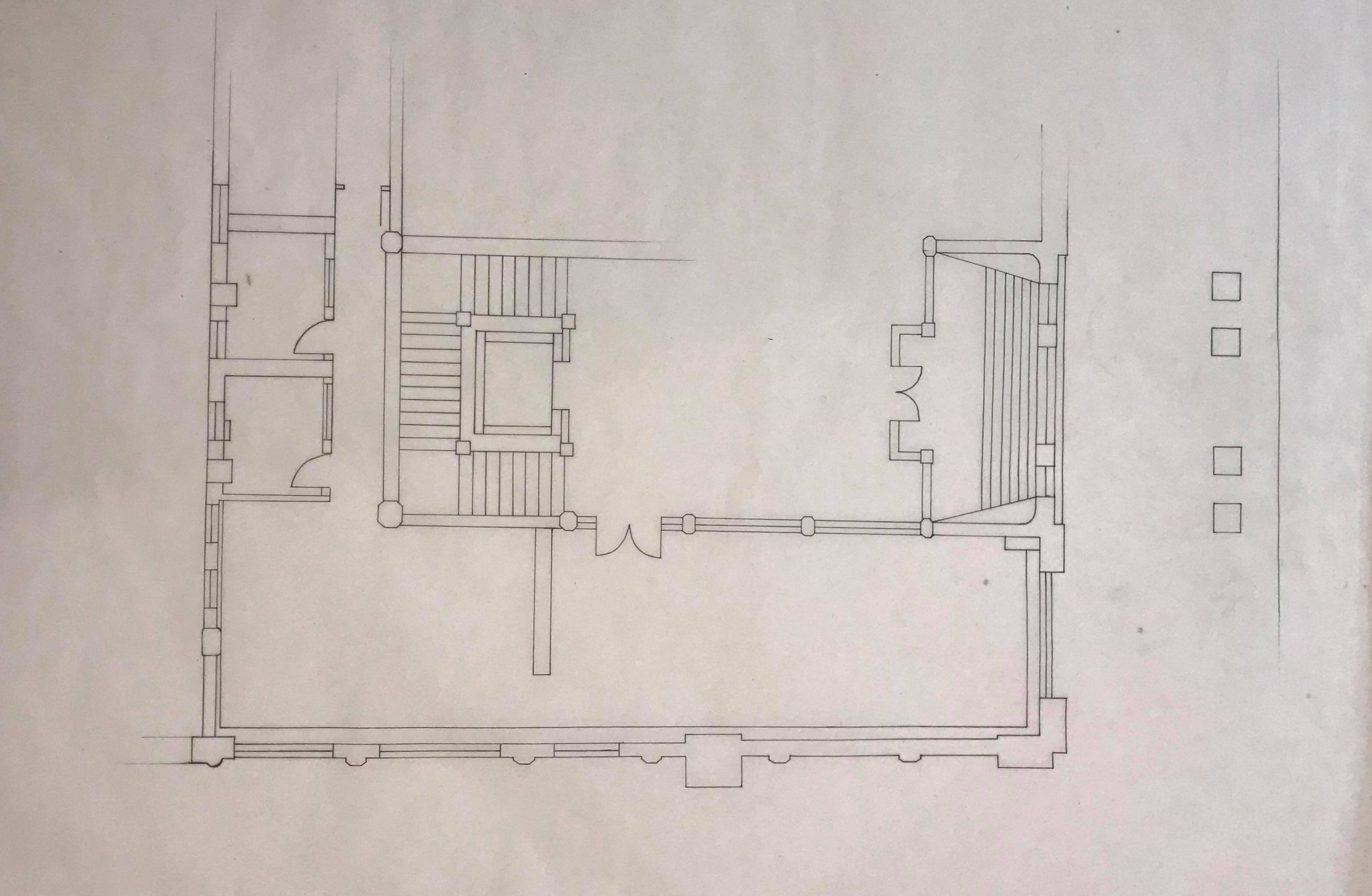
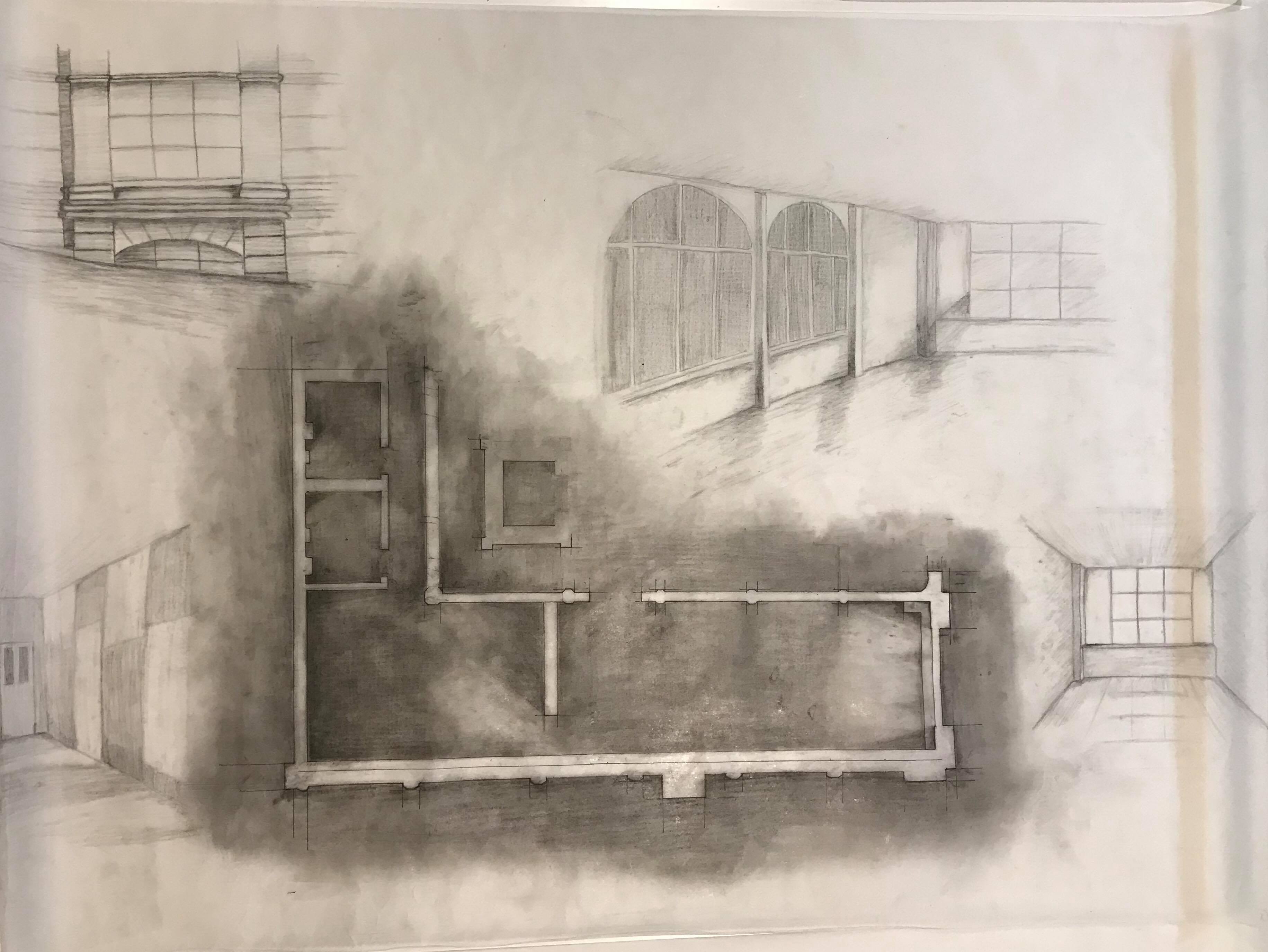
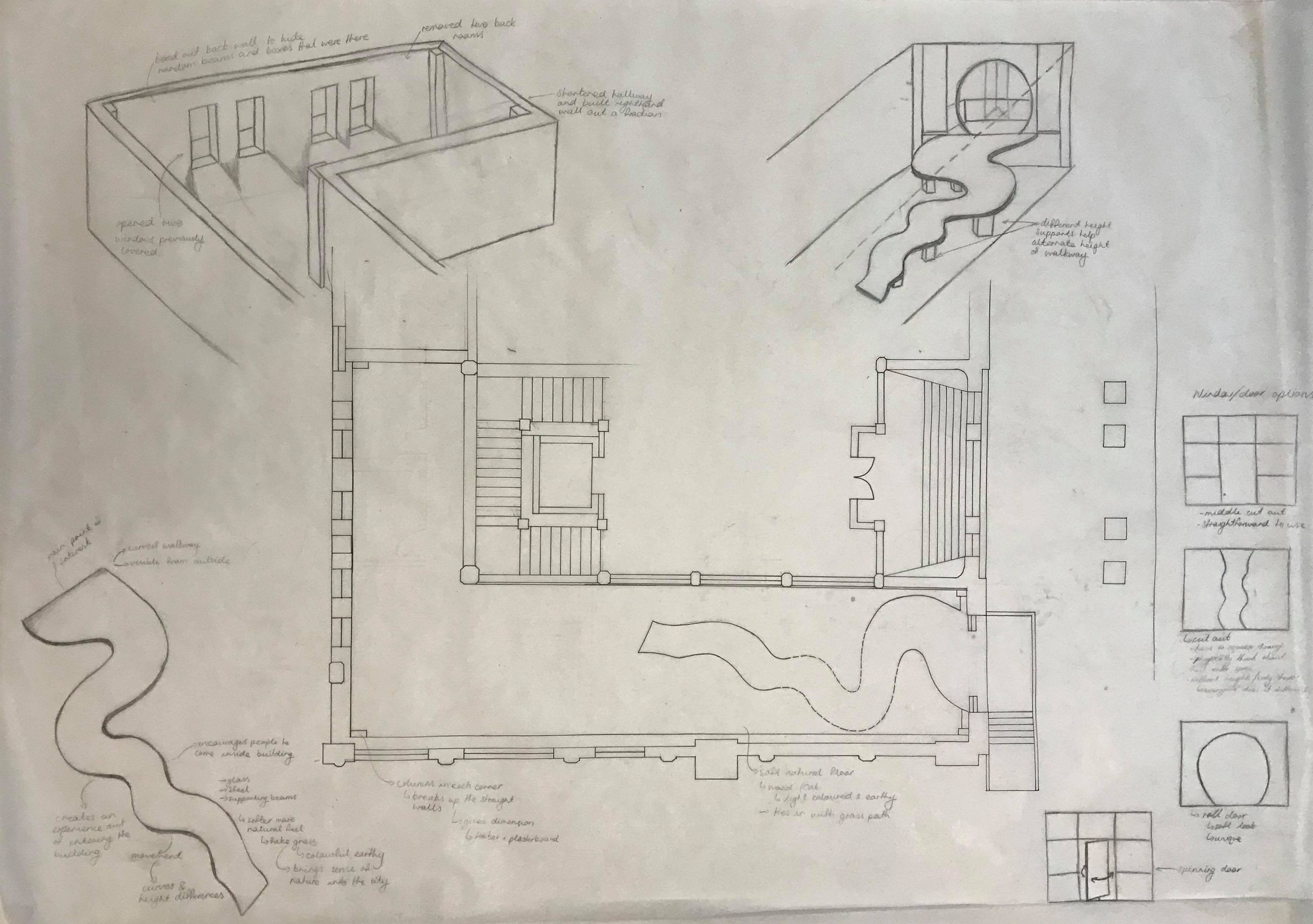
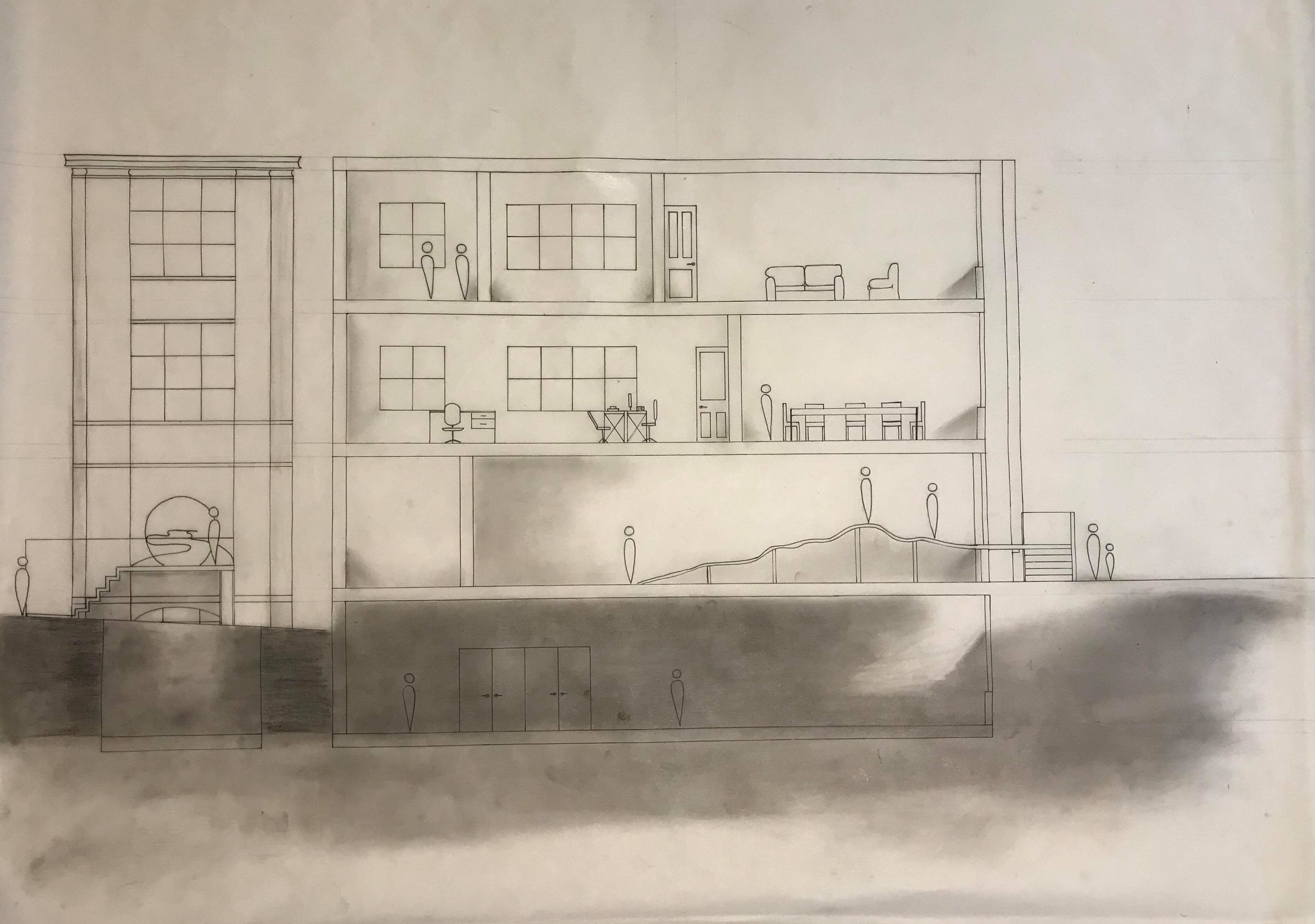
From the site visits and the measurements we collected we then created a plan, series of observational sketches (light/dark, loud/quiet, movement/stasis etc) intervention plan and a section drawing. These were done to a scale of 1:50.
These drawings were fun to do and gave me the opportunity to be creative and explore all the different possibilities for the space and what I wanted to create.
My intervention was focused mainly on the street facing window at the front of the building. This window for me was the part of the gallery that captured my attention the most. From the street you can only see upwards of the window towards the ceiling and nothing below it. I imagined what it would be like if this window was to be more of a door instead. How odd would it look if you saw someone walk up to the height of the window and disappear through the other side! Not only that but you wouldn’t be able to see where they went once inside. A true mystery. I didn’t want to make this a traditional door though but more something that would make you think about how you enter the building and really make an experience out of it.
I kept the fake wall down the eastern side of the gallery and constructed a fake wall along the western side too, where the door and arched windows had perviously been. I wanted to have the main source of light coming from the main window and a small amount from the back. The darkness of the space was comforting to me when I visited the Gallery and I wanted to keep as much of this as possible without making the space seem dingy and gloomy. Because of this I took out the rooms in the back of the building, slightly shortened the hallway to square up the space and then opened up the two windows that were covered along the back wall. along with opening up the windows along the back I wanted to build out that wall to cover the unusual beams and boxes that were there. This then gave me four smaller windows at the end and one main window/door hybrid at the front.
 Spatial Design
Leave a comment