
As part of our project we’ve been asked to create a pocket forest to grow in what was the un-used courtyard area. There are several benefits to a pocket forest.
- Help control building temperature. The building is largely covered in glass meaning the sun heats up the inside with nothing to block it. Inside the temperatures can get unbearable, especially during summer. A native pocket forest will block the majority of the suns rays keeping the buildings interior cooler. This also reduces the cost of cooling systems for the building as its a cost free natural system. Light will still be able to filter through and the scenic outlook is much better than staring at concrete buildings all around.
- Attract new species. A native pocket forest will encourage indigenous species of birds/insects into the area. It will create a new ecosystem as it develops.
- Help reduce carbon footprint. Forests help to cool the planet, give us fresher air to breath and reduce the amount of Carbon Dioxide.
- Educational. Native species of trees and birds could be used as an educational tool for local children. Living in a city they may not get much opportunity to see native forests. Having a small version in close proximity could be used to educate and help more people get into conservation of our native bush/birds.
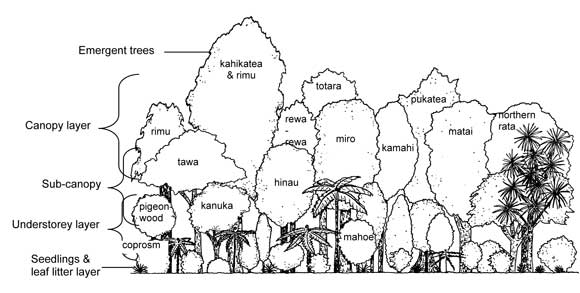
Retrieved from: https://www.doc.govt.nz/get-involved/run-a-project/restoration-advice/bush-restoration/understand-the-bush/bush-layers/
In creating a pocket forest we were asked to think about the species of trees we would want to incorporate and which species of birds/insects they would then attract. As shown in the image above there are several layers/heights of forest trees so it’s important to include a mixture.
- Beech trees have insects which produce honeydew. This attracts native birds such as Tui, Bellbirds and Kaka.
- Kowhai trees grow to be around 25m high, they are a good nectar source for birds and traditionally Maori used it for it’s medicinal properties and hard-wood.
- Miro trees grow to be around 25m, they have fruit which is especially enjoyed by Kaka and Wood Pigeons.
- Matai trees grow to be around 25m, Bees collect pollen from this tree and Kaka and Wood Pigeons eat the fruit.
- Nikau Palms grow to be 10-15m, they have a sticky sweet nectar that attracts bees and insects in turn attracting birds. They have a red berry that Wood Pigeons love.
- Ferns, NZ has 200 species which can grow from 20mm up to 10m tree ferns. They are a good lower layer to the forest but also can creep up into other layers.
- Kaikomako trees are small canopy tree. They produce a fruit which attracts Bellbirds.
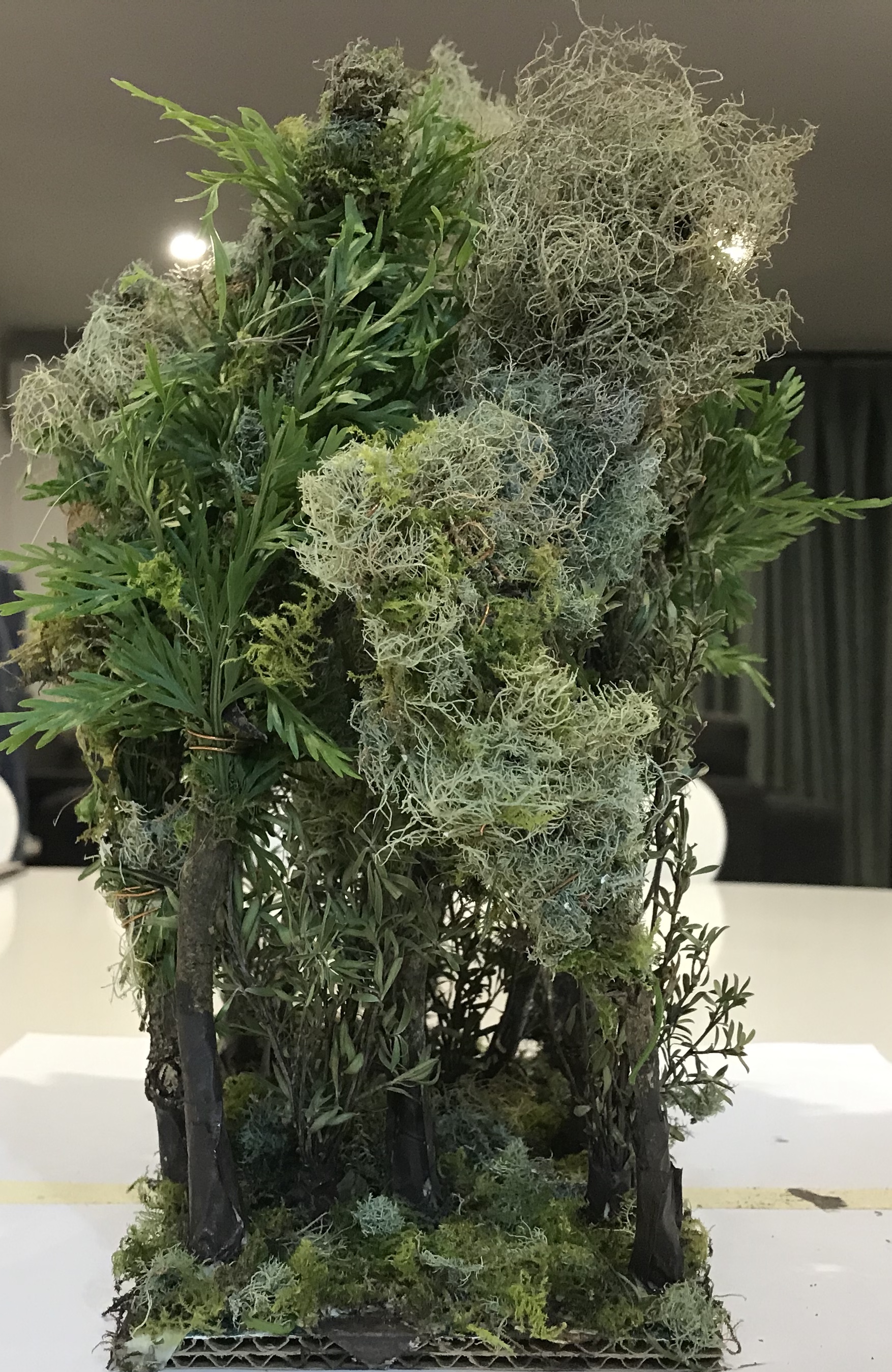
 Spatial Design
Leave a comment