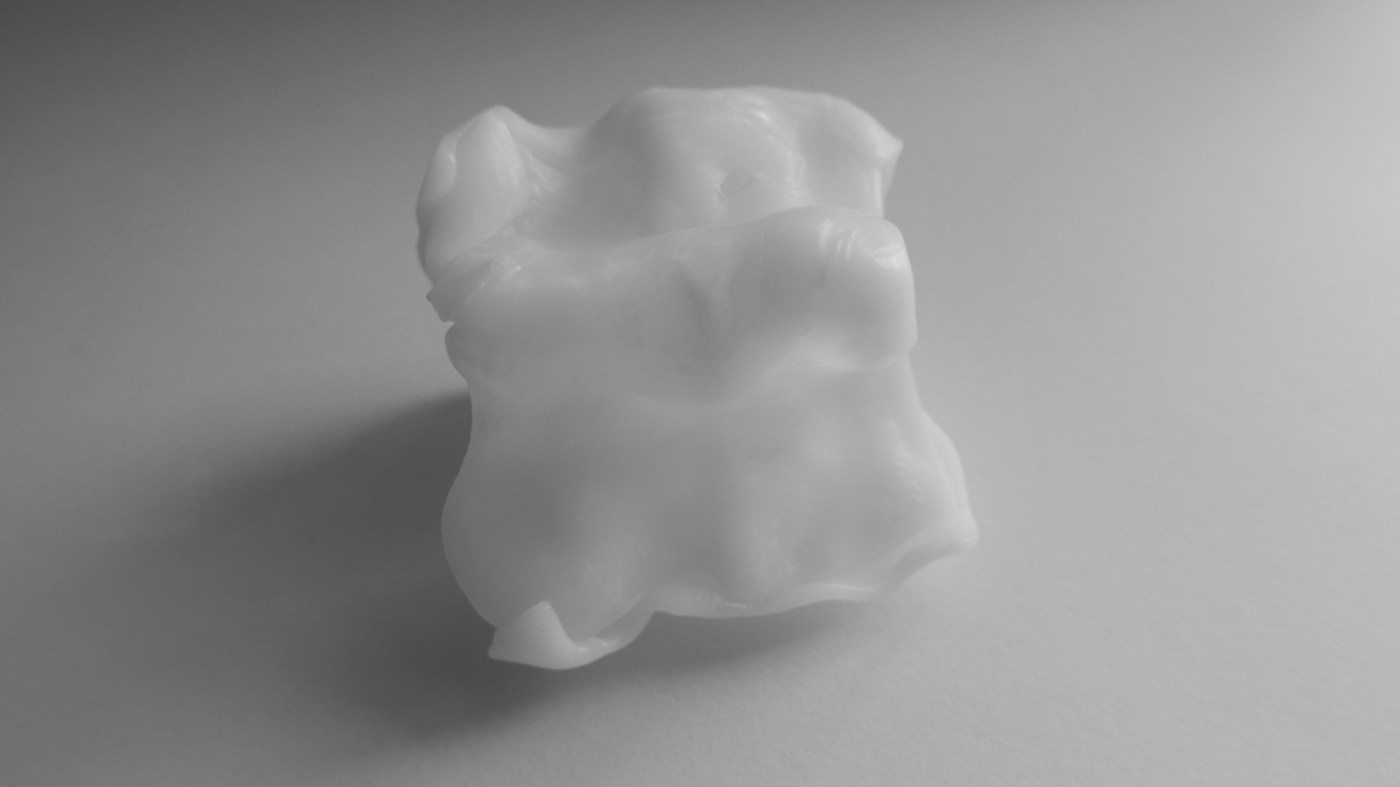
Initially when thinking of materials, I considered using some kind of mouldable plastic such as acrylic. Through thermoforming it could be possible to create moulds of the desired shapes and then heat and bend the acrylic around the individual form – or a section of it, then join it together – as acrylic is easy to thermoform, fabricate and bond. I considered this as it is lightweight but strong and has a look that would make the structures seem fairly solid and structural. It would also be convenient for the variety of colours used throughout the space.
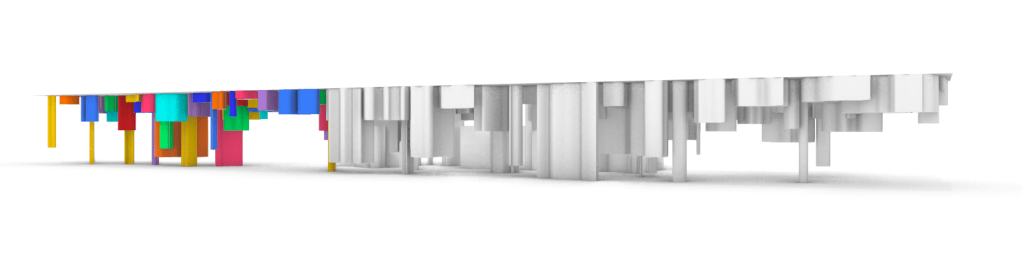
When considering lighting within the space, the idea was to have lights within a number of the forms and have them alternating when they’re on and off. The alternating of the lights was to prevent the space from becoming overly bright, I still want the space to have a sense of intrigue about it and not be flooded in light, giving everything away. Through limited lighting it also creates the opportunity for the shadows of the forms to be more prominent. The transparency of thin acrylic would allow for the light to shine through whilst the colour of the material would also be cast onto the surrounding structures.
When thinking back to my concepts for my design, I began to think about a way that I could bring a playful sense into the space through the materials used and if that was an angle I wanted to look at. As far as acrylic goes, it’s not a very tactile material, at least not in the way I intended for it to be used, so it could be going against that concept of playfulness if what I am wanting is for people to feel like they can really use and explore the space. I also realised as I progressed with my rhino model that the space could begin to look crowded and potentially claustrophobic if the structures were constructed from a more solid material.
Considering all this I looked at other options that could introduce a tactile element and also allow the space to feel as if it had room to breathe. I recalled an artist that I considered using as my artist model for this project, Korean sculptor Do Ho Suh. Suh uses a polyester fabric to reconstruct apartments and other buildings to scale that are able to be moved through by the viewer. The installations are beautifully detailed and create a real sense of place for the viewer and the transparent nature of the material used allows for the viewer to see the whole layout in one go, almost as if you had x-ray vision and were able to look through your apartment walls
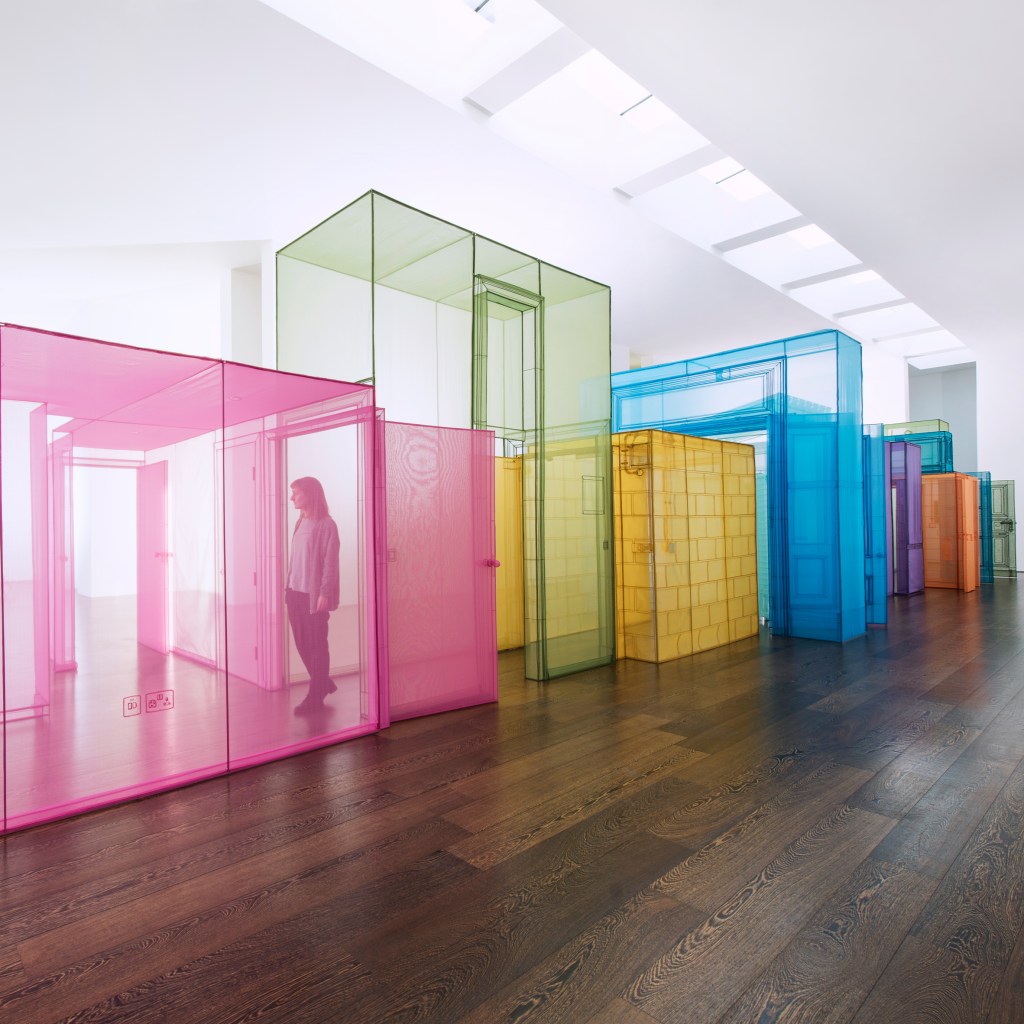
A similar material to this would be ideal for my installation as it is easy to fabricate, flexible, transparent and also has a tactile element to it. It would allow light to move throughout the space but also stop the space from feeling too restricted as a more solid material may have done. A spine for each individual form could be constructed out of steel or wire framing and the fabric then wrapped around this, making the forms structurally solid but the ‘skin’ something that could potentially be interacted with. The use of fabric also brings with it a sense of fragility which could be an interesting link with the concrete structure that will house it, the theatre itself has a fragile feel to it as it falls further into disrepair. Another benefit of fabric is its weight. As these structures will be hanging off of/attached to the ceiling I wouldn’t be able to use anything too heavy but the fabric would be much less than the acrylic.
I did some small scale material tests using both a mouldable plastic and some sheer fabric wrapped around wire framing. The texture of both models reacts with the light differently and I really enjoyed working with both. However I think the fabric material will work better in the space due to the small enclosed area and not wanting to make it feel too crowded. The transparency of the fabric would prevent the space from feeling too crowded and blocked off.
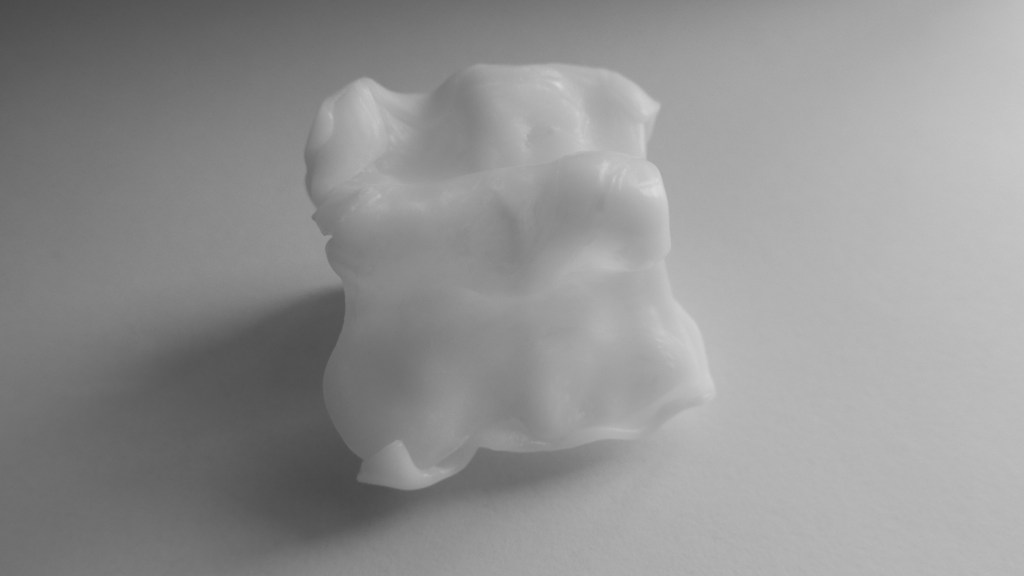
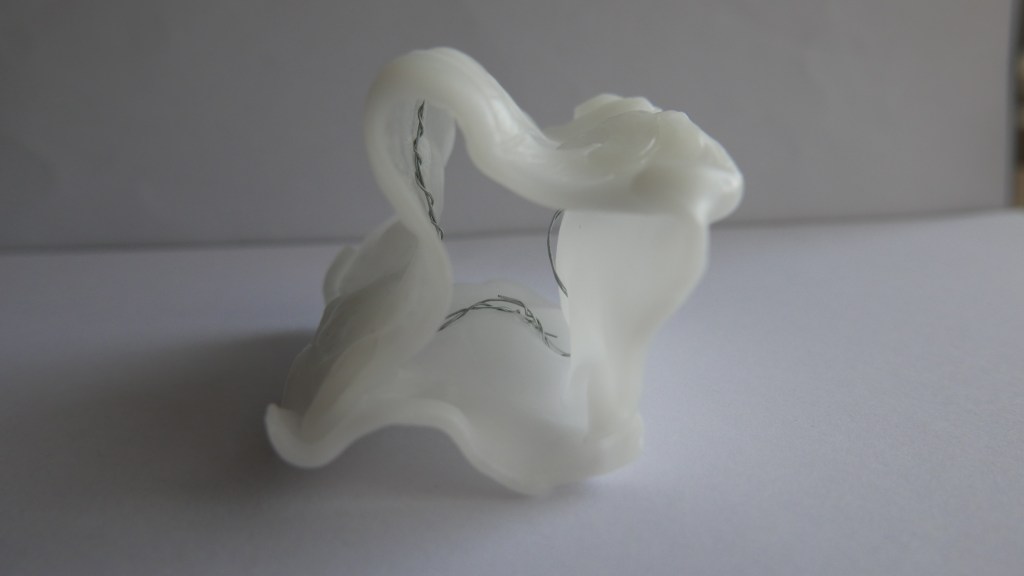
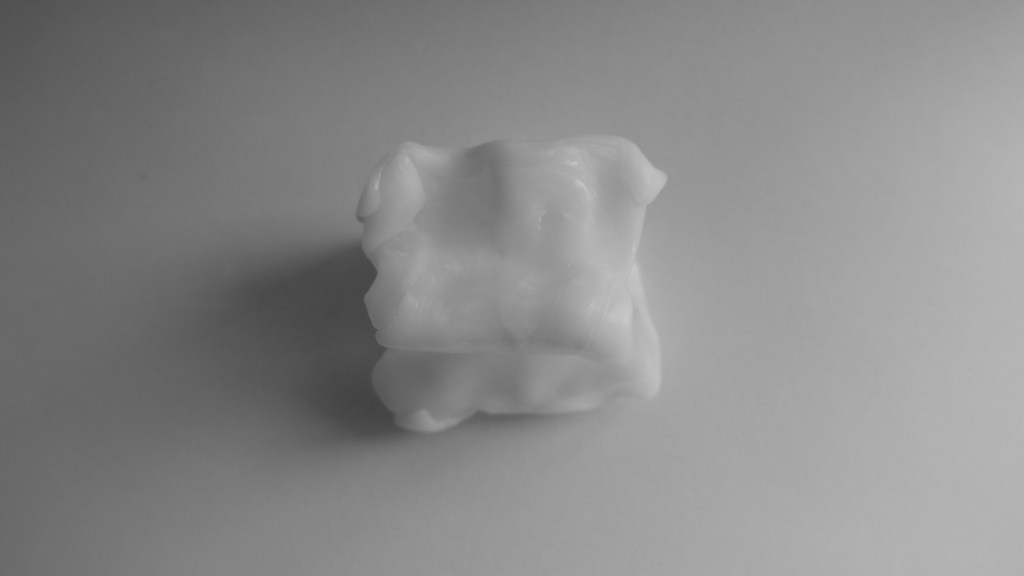
The mouldable plastic turned out less smooth than I thought but I actually really like the final product. The shape and the imperfect surface create a more organic looking structure that feels very intriguing to me and the shadows and tones it creates feel very soothing and fluid in my opinion.
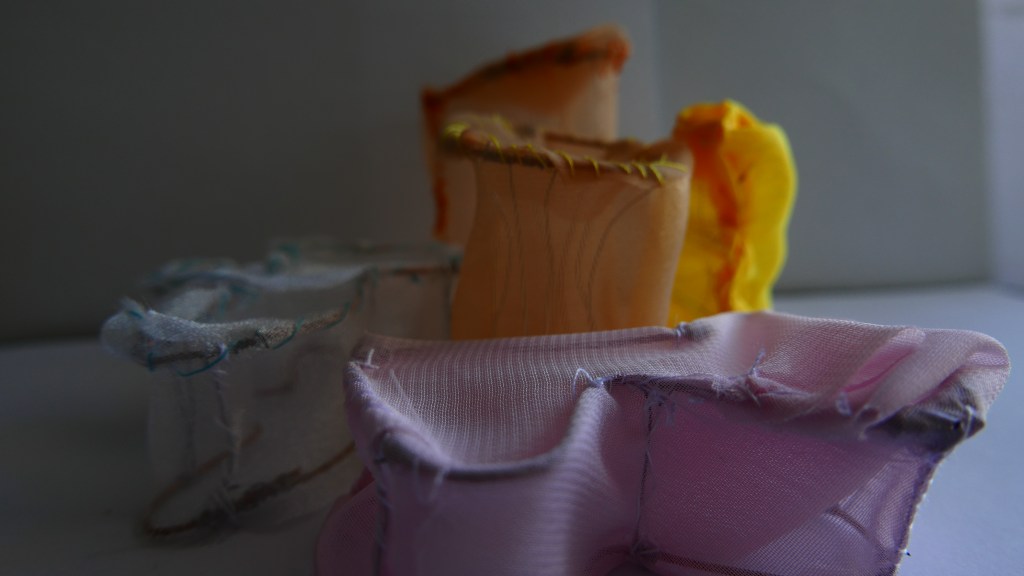
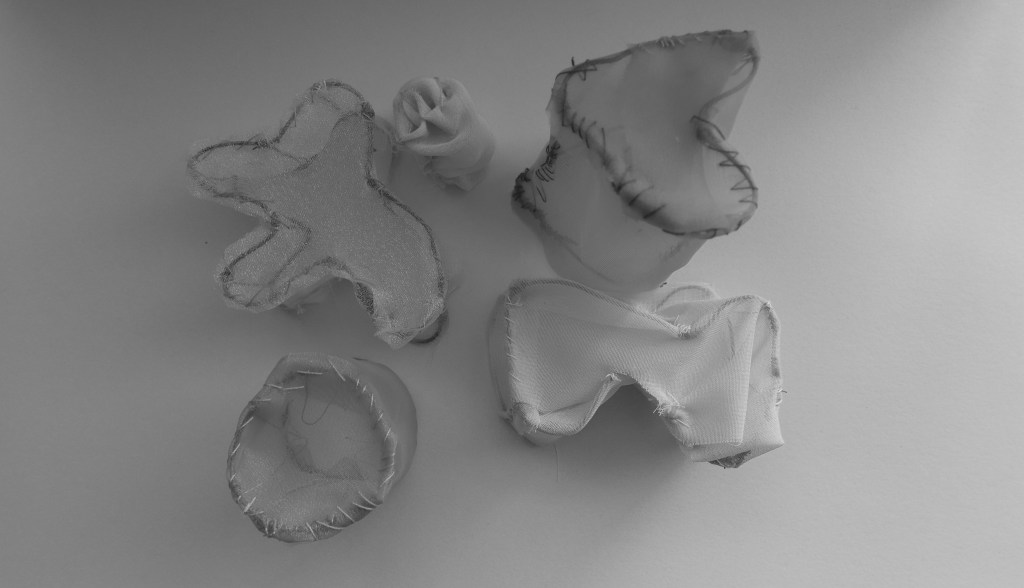
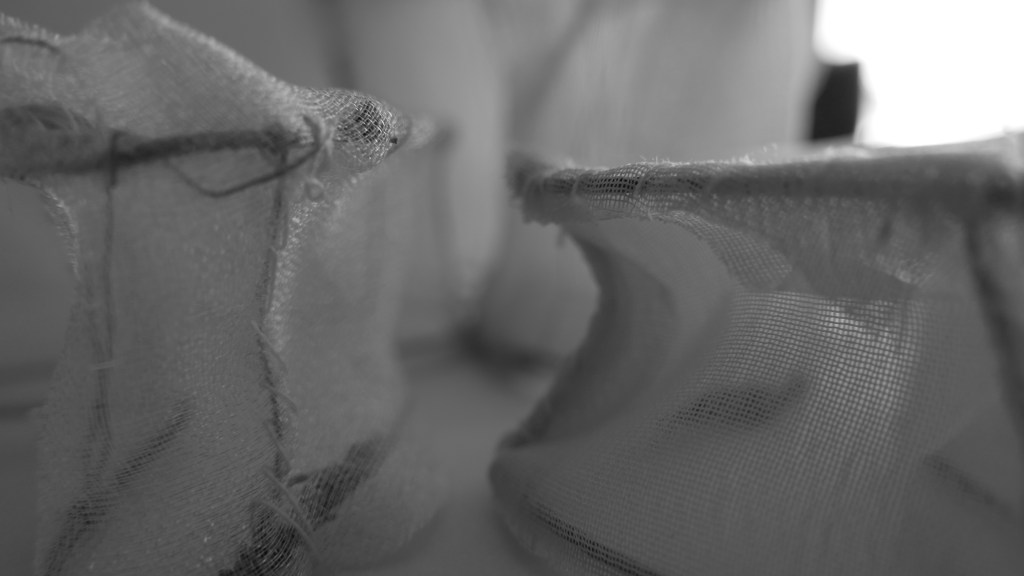
The transparency of the fabric and the way the light plays off the folds of the material is what I was hoping to get a clear sense of with these models. I realised whilst making these that in terms of introducing colour into the design I could use light instead of having each form a different coloured material. This would also give the option of having the space as a sort of blanked out area with the grey toned surfaces of the original site and the white semi-transparent nature of the installation if the lighting was to be turned off. With the lighting on it would transform the whole space from something quite soft and simple to something much more bold and provoking.
Additional Material Considerations
There were several other materials that I thought could possibly work for this installation however I didn’t take them any further Than the initial idea.
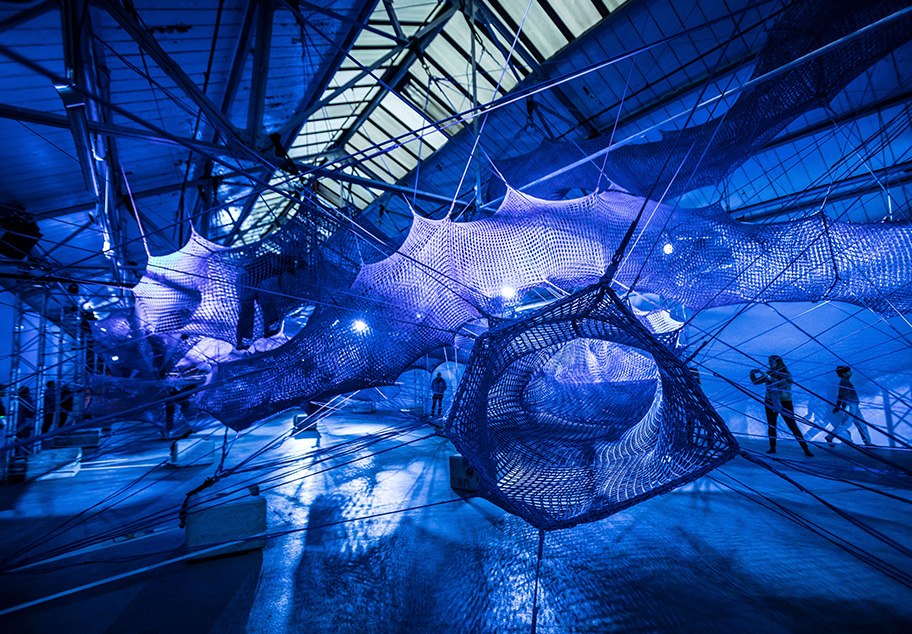
- Woven rope structure: Similar to what they use in playgrounds as climbing frames. I thought this could really tie into the idea of creating a playful sense in the space and a material that would add a great amount of texture. I found an immersive installation by Anya Hindmarch called The Weave Project which is similar to what I imagined a woven structure looking like, however mine would’ve been less interactive.
- Paper: The fragility of paper could be used as a sort of opposite to other highly tactile and interactive. Paper itself is very interactive, used for a great number of things in different ways. However if used for this design, in a sort of fragile, moulded way, that would be its only use and it would be easily damaged if interacted with. I though it could be an interesting look into the properties of a material and how these lend themselves to different uses.
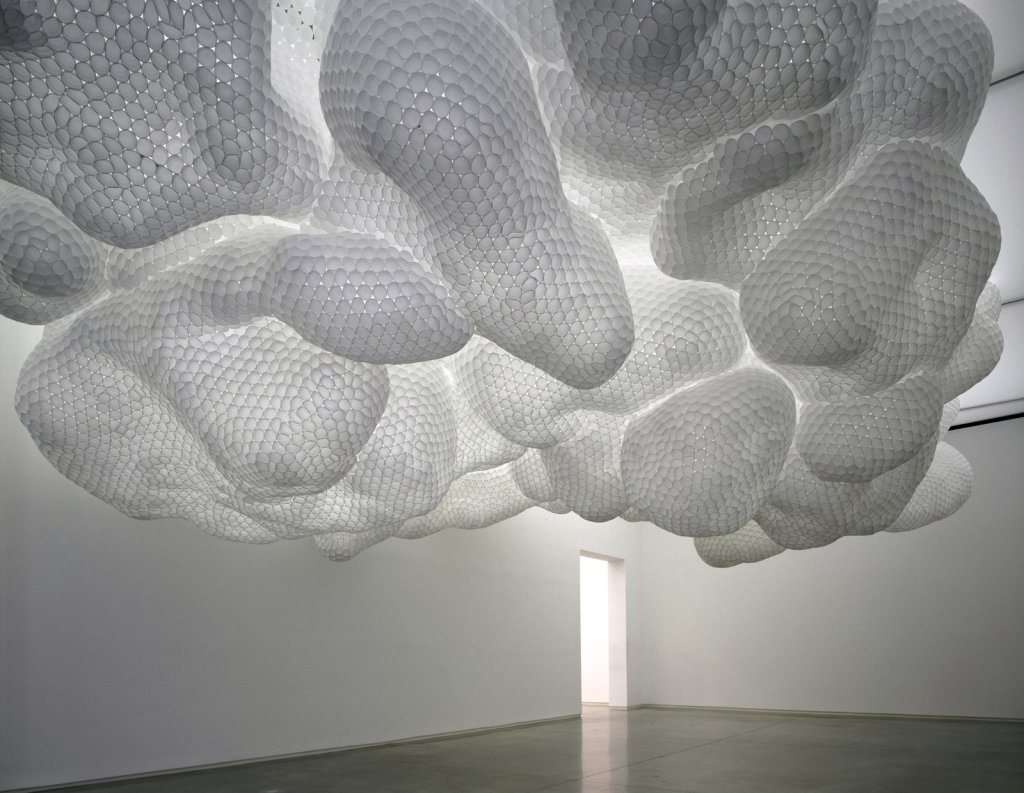
- Recycled plastic: Using recycled plastics from the surrounding city could be a way to include the public further into the design. It could be ever growing and changing with additions added on constantly. It would also be a way of showing the large amounts of waste we create. This idea was inspired by artist Tara Donovan, a piece of hers work that uses styrofoam cups to create a sculpture.
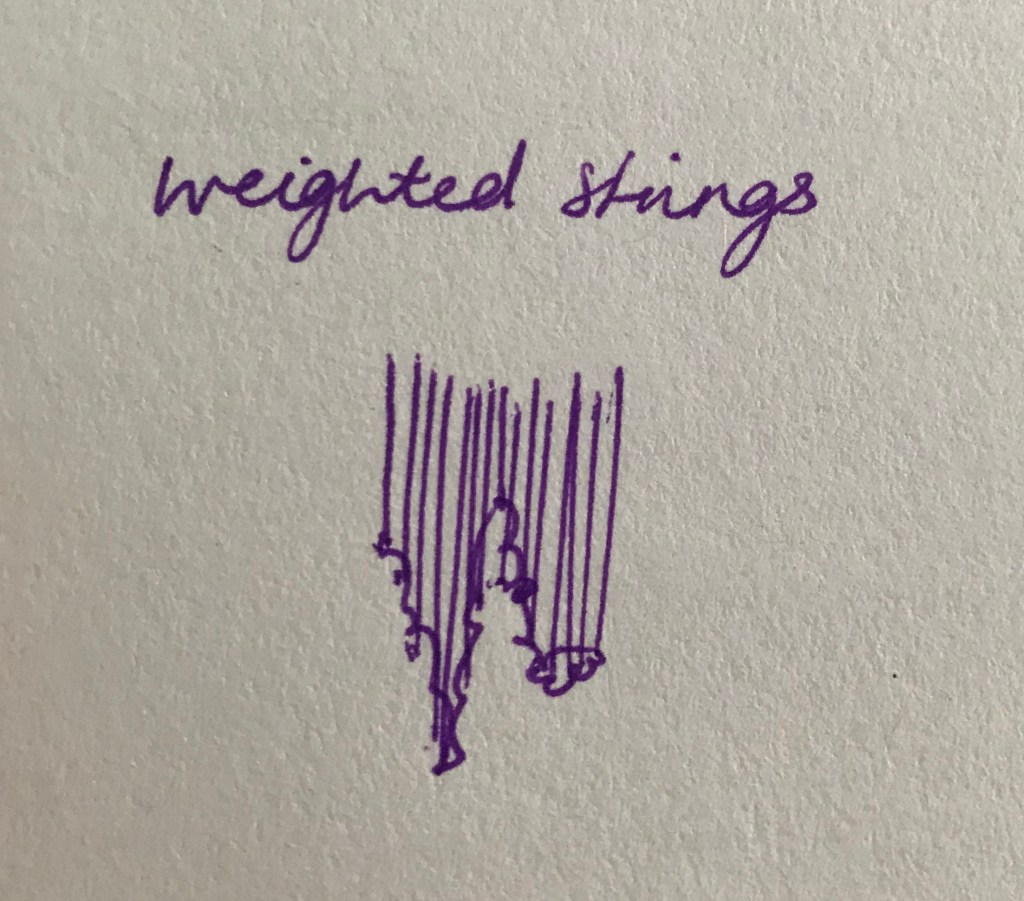
- Weighted strings: I considered the idea of having a series of weighted strings at all different heights to create the exterior form of the shapes. This idea would create a very fluid space that would be highly interactive as the nature of the strings would allow for a high level of movement, even if it was simply just the breeze from someone walking past.
 Spatial Design
Leave a comment