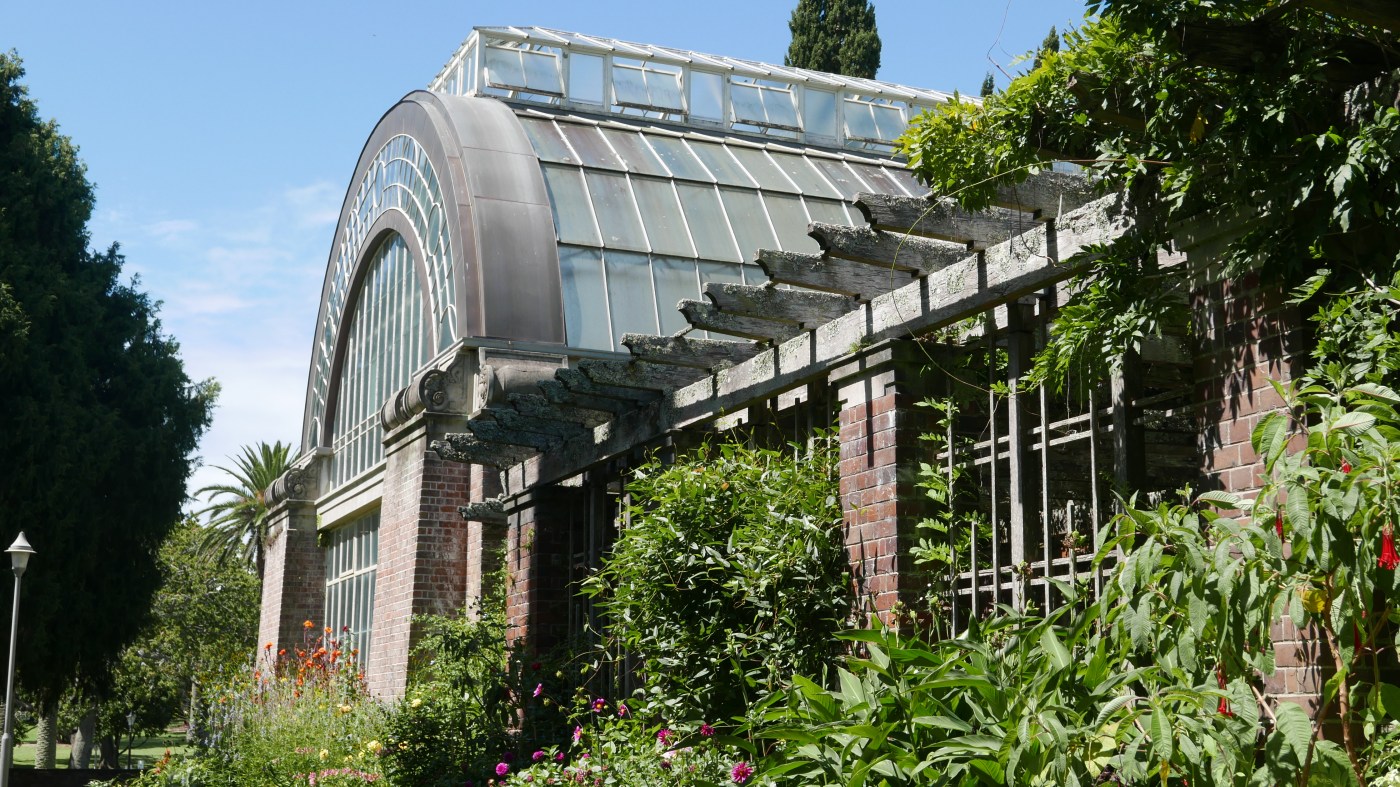
Wintergardens
- Situated in Auckland Domain
- Built in stages between 1916-1928 using funds from the Auckland Industrial, Agricultural and Mining Exhibition in 1913-1914
- Renovated several times – 1945, 1954, 1993-1994
- Currently undergoing seismic upgrades
- Designed by Architect William Gummer of Gummer and Ford
- Showing influences of Sir Edwin Lutyens and Gertrude Jekyll
- Designed in the Arts and Craft style
- Consists of: Temperate glasshouse and heated glasshouse (28 degrees), pergolas, fernery, sunken pool and rockery
- Glasshouses are barrel vaulted steel with masonry buttressing and underfloor heating
- Fernery established in old scoria quarry
- Bronze sculptures of native birds in fernery
- Statues in courtyard added in 1920’s and 30’s by local business man William Elliot
- Statue of a cat on a ball reaching towards sky (by Richard Gross, who also sculpted The Athlete on domain gates) has two stories as to how it came around:
- Story 1: As part of the original 1927 plans, originally meant to be a bear but as bears symbolised Russia (and decision makers were anti-socialist) they decided to change it to a cat
- Story 2: Story published in 1976 newspaper says the statue is the Kind of cats. His up-stretched paw is appealing to the king of birds to stop the was between the two species
- Statue of a cat on a ball reaching towards sky (by Richard Gross, who also sculpted The Athlete on domain gates) has two stories as to how it came around:
- Heritage listed category 1 – “places of special or outstanding historical or cultural heritage significance or value”
- Displays exotic potted plants, permanent plants and native plants
- Demonstrates attitude to natural world at the time with exotic flora ‘discovered’ by European colonial expansion
- Reflects changes during the 1920’s with a greater influence on native plants
- In the early 1900’s it provided a place for people to promenade during the winter months
- Played a role in the gentrification of the domain (was previously frequented by undesirables)
- Gardens are among best preserved examples in the country and are nationally significant for demonstrating early 20th century garden design
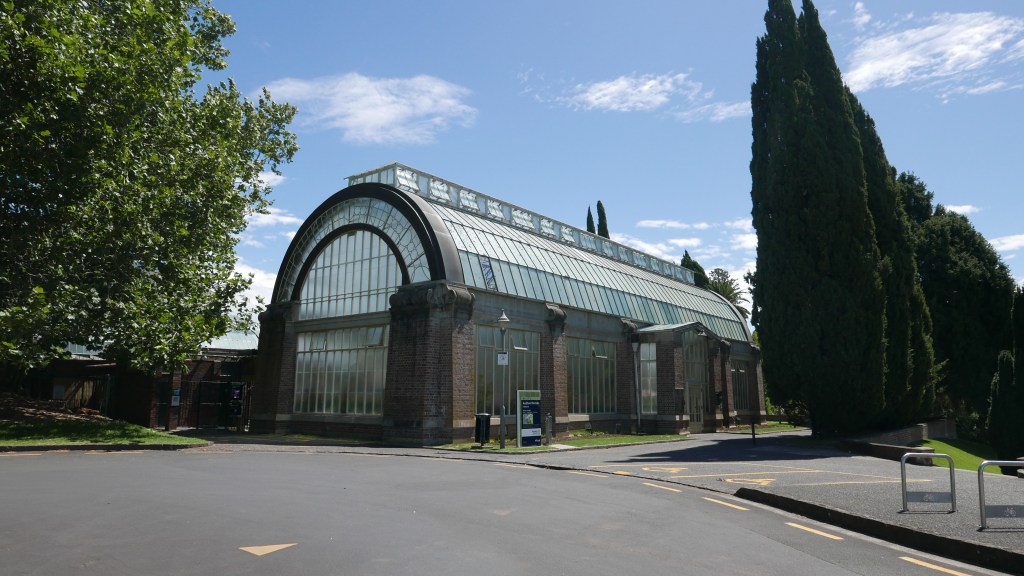
Temperate glasshouse 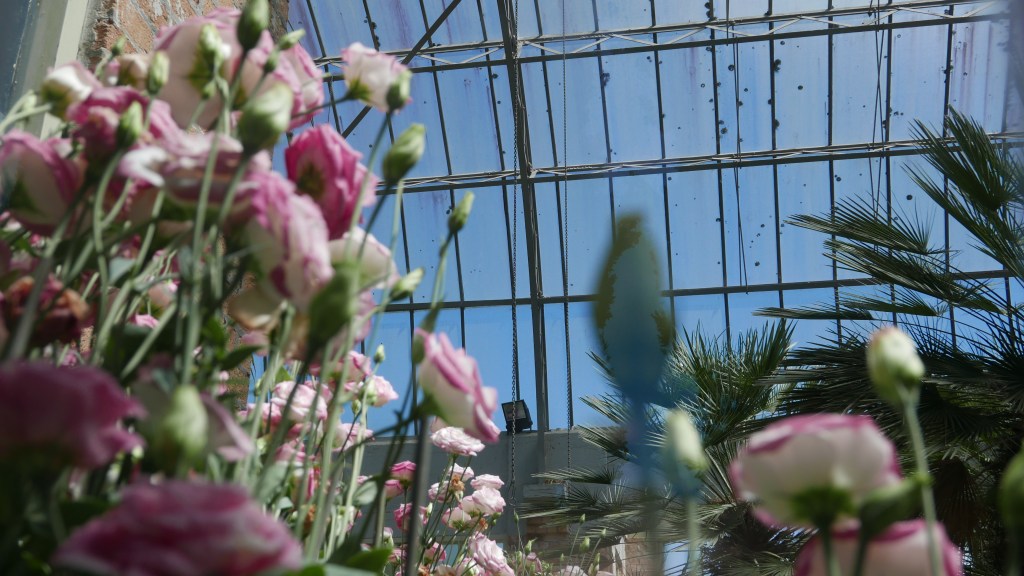
Interior of temperate glasshouse 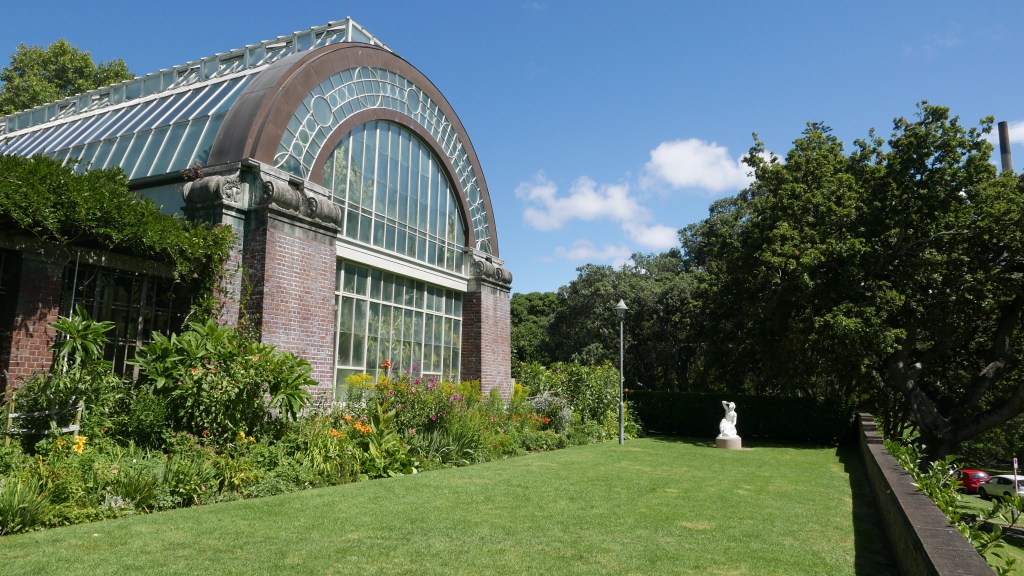
Heated glasshouse and lawn 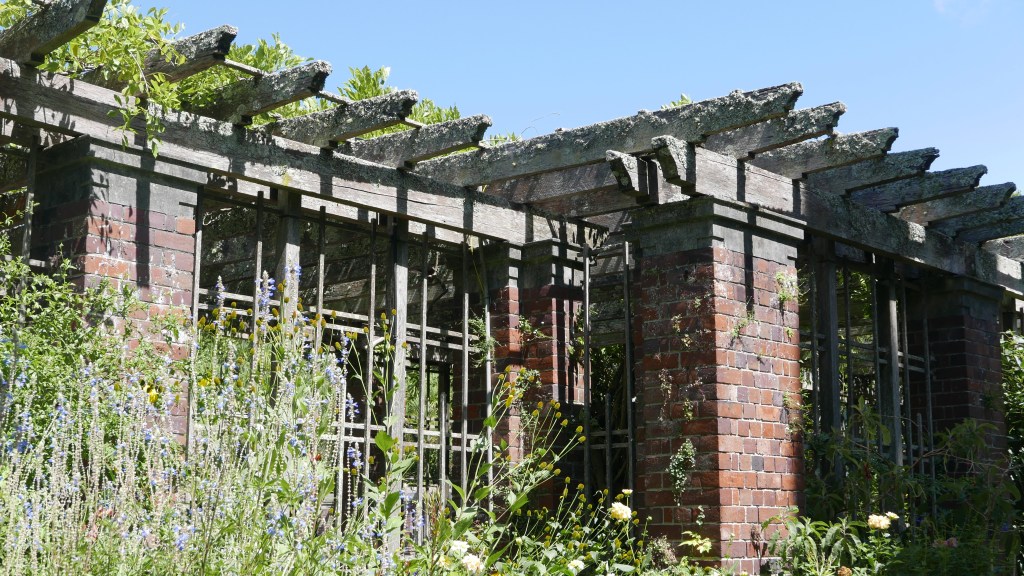
Northern pergola
Auckland Domain – Pukekawa
- Extinct Volcano
- Pukekawa meaning hill of bitter memories
- This name refers to battles fought on the grounds between Hongi Hika (war leader of Ngāpuhi iwi) and Pōtatau Te Wherowhero (leader of Waikato iwi and first Māori king). A peace treaty was signed here in 1828
- A Totara tree was planted by princess Te Puea Hērangi (great grandaughter of Pōtatau Te Wherowhero) to commemorate the battles and the settlement of the disputes
- Situated in Parnell, Aucklands first suburb
- Set aside as public park in 1880, 200 acres (80 hectares) by Governor Robert Fitzroy (Aucklands oldest park)
- Pond was used by Auckland Acclimatisation Society as testing space for exotic fish and plant species
- Pond fed by underground spring became Aucklands first water supply
- Initial site of Auckland Botanic Gardens
- Site of Auckland Industrial, Agricultural and Mining Exhibition 1913-1914
- Kiosk and Rotunda are surviving features from the exhibition
- Used as a campground to house soldiers during WWI and WWII (and educational camps in between)
- Consecrated ground in front of Auckland War Memorial Museum is the site where New Zealand soldiers set off from during WWI (many of them later died at Gallipoli)
- During WWII American troops were stationed at domain
- Soldiers often paraded through the domain before heading overseas or for training camps
- Site of Auckland War Memorial Museum and the Wintergardens. Auckland City Hospital sits just outside the domain grounds
- Also consists of sports fields, bush walks, duck pond, formal gardens, band rotunda, hibiscus gardens, fairy gardens, magnolia gardens, Pukekaroa hill, sensory garden, Watsons bequest and grandstand
- Site of oldest continually operating plant nursery in NZ
- Auckland Museum opened 1929 Neo-Greek architecture (by the firm Grierson, Aimer and Draffin)
- Cenotaph outside Auckland War Memorial Museum is a scaled down replica of Edwin Lutyens design for the cenotaph at Whitehall, London
- Reportedly built off looking at news reals as the blueprints were too expensive
- Visited by Queen Elizabeth II 24/12/1954
- Views of Waitemata Harbour, Rangitoto Island, Auckland CBD and Ports of Auckland
- Used for events, concerts, sporting games
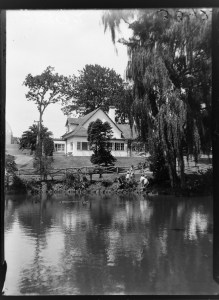
Auckland Domain pond and kiosk 1921
retrieved from: https://digitalnz.org/records/30076588/auckland-domain-pond-and-kiosk-1921
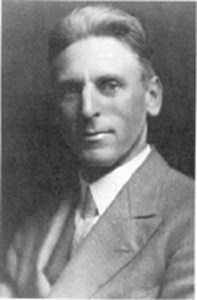
William Gummer (1884 – 1966)
- Auckland born architect
- 1908-1913 travelled in UK, Europe and USA
- Worked for Edwin Lutyens in the UK (leading British architect at time)
- Worked for Daniel Burnham in USA (major American architect and founder of Chicago school of architecture)
- Joined Hoggard and Prouse Architects in Auckland in 1913
- A significant commission he undertook here was the NZ Insurance building (now the Guardian Trust building) from 1914-1918
- 1923 joined with Charles Ford and created Gummer and Ford Architects
- Amongst others, their firm designed the Dilworth building (1926), Dominion Museum (1936), State Insurance building (1940), Auckland Railway Station (1930)
- Received gold medals for the design of Auckland Railway Station and Remuera Library
- Gummer is responsible for the design of: Bridge of Remembrance (Christchurch 1924), Cenotaph (Dunedin 1927), Tauroa (1916), Graggy Range (1919), Arden (1926) and Te Mata (1935) homesteads in Havelock North, Hawkes Bay
- Elected a fellow of NZ institute of architects in 1914
- President from 1933-1934 and later became a life member
 Spatial Design
Leave a comment