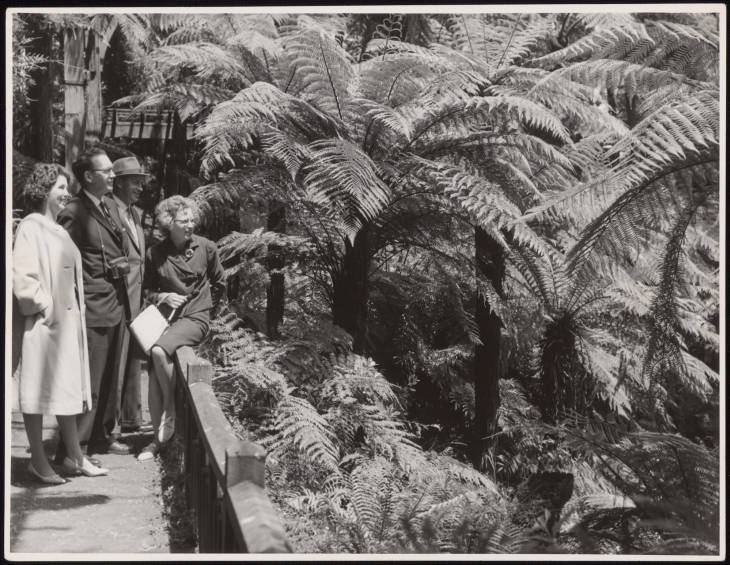
English Landscape Garden (picturesque): 1740-1820
- Aristocratic estates
- Seamless landscapes (use of hahas)
- Picturesque, tidied up, bucolic, painterly landscapes
- Landform, copses and water
- Often with classical allusions (greek temples/pillars) and narratives
- View from the house of a rolling, pastural landscape
- Whole villages often moved to accomodate size, trees moved
- Designed “natural” landscape
- Notable influence: Capability Brown
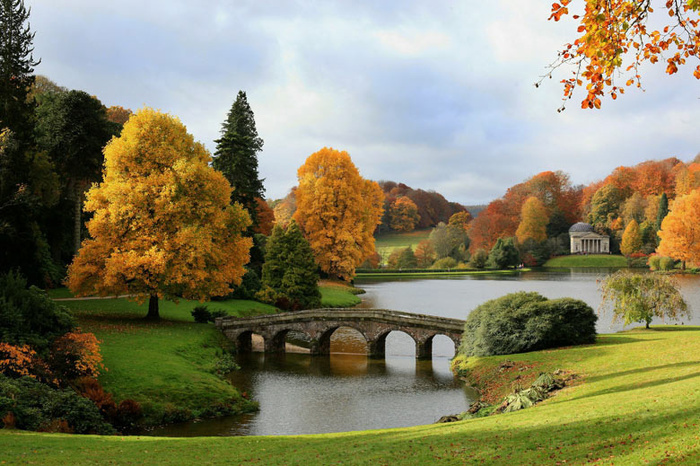
Retrieved From: https://www.imageseen.co.uk/photograph-stourhead
Gardenesque (Victorian garden): 1830-1914
- Plant collections/ arboretums and public parks
- Displaying of plants
- Exotic Plants (as people gained better education they began to leave the empires and to explore and”discover” the world)
- Fashionable specimens
- Bedding annuals
- Ferneries
- Glass houses (required to store exotic species in controlled environments)
- Glasshouses became public
- Formal Gardens
- Plant Breeding
- Commercialisation of plant supply and plant nurseries
- Anti picturesque
- Element of common touch (as opposed to elitists of english landscape gardens)
- Gardens for common people
- Public open spaces for everyone
- Consequence of industrialisation as people needed somewhere other than the poor living quarters they had
- Notable influence: John Claudis Loudon
- Example: Albert Park – Symmetrical, garden beds, statue of Queen Victoria (park named after her husband Prince Albert), exotic trees, flower clock
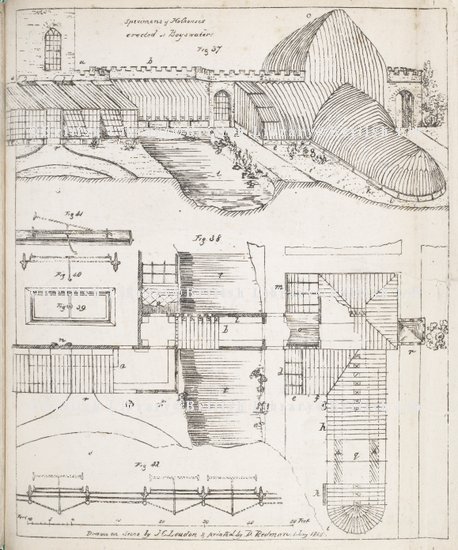
Retrieved from: https://thegardenstrust.blog/2014/05/27/john-claudius-loudon-and-greenhouse-technology/
Arts and Craft Movement: Architecture 1850-1910, Gardens 1880-1930
- Rustic house and buildings
- Structure: Garden rooms (walled or hedged) architecture as garden infrastructure
- Mass planting
- Herbaceous (perennial) border
- Plant design – sequential, seasonal, colour
- Middle class
- Rural settings
- Gardener owners
- Look back at pre-industrial times
- Gothic revival
- Created locally
- Idyllic rural aesthetic
- Emphasis on craftsmanship
- Notable Influences: John Ruskin, Gertrude Jekyll, Edwin Lutyens
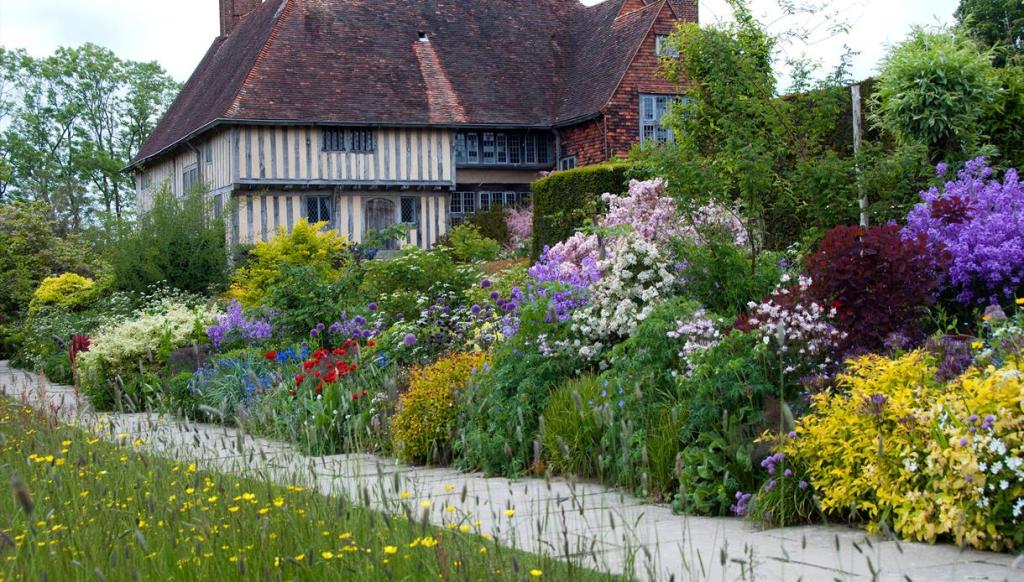
Retrieved from: https://www.visit1066country.com/things-to-do/great-dixter-house-and-gardens-p52003
Botanic Gardens
- 1545 Padua Botanic Gardens, Italy were the first botanic gardens
- Kew Gardens, London
- 1759 Princess Augusta, mother of King George III, founded a nine-acre botanic garden within the pleasure grounds at Kew in
- 1840 transferred from Crown to government and opened to the public
- Scientific classification of plants (herbarium, database, seed banks)
- seen as understanding world in familial terms (related/evolutionary nature)
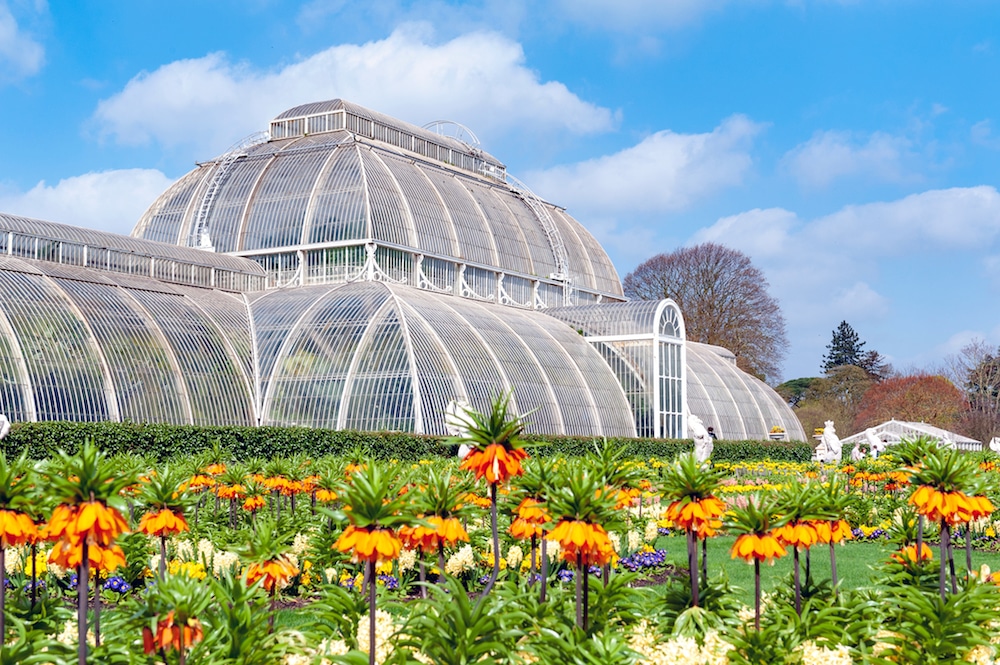
Kew Gardens, Uk
Retrieved from: https://secretldn.com/kew-gardens-open-lockdown/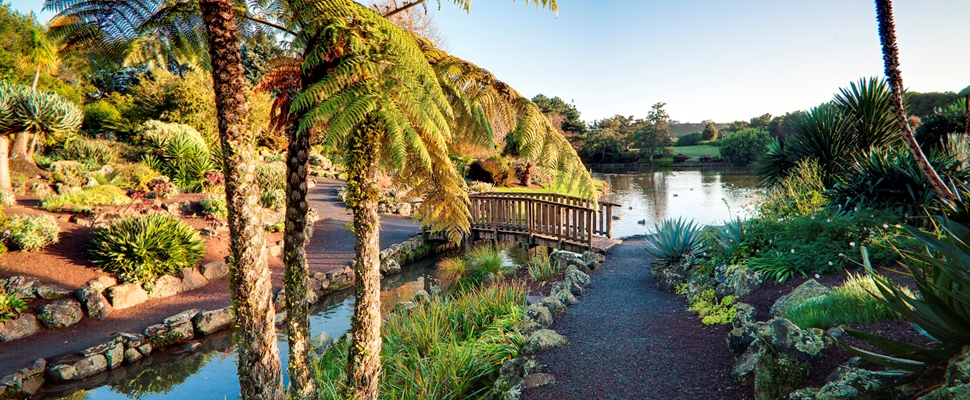
Auckland Botanic Gardens, NZ
Retrieved from: https://www.aucklandbotanicgardens.co.nz/our-gardens/rock-garden/
Glasshouses and Environmental Modification
- Plants set requirements for design (design around the plants, what do they need?)
- Variety of conditions needed, including heat
- existing landscape conditions ignored, even hermetically separating the indoor/outdoor environments
- Wintergarden modified environments: Tropical/temperate, water, shade, climbing structures (modified environment to suit range of plants)
Ferneries
- Common in NZ
- Often sunken
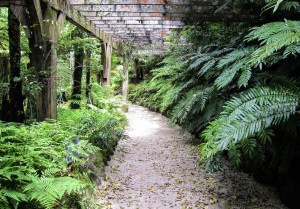
Retrieved from: https://theplanthunter.com.au/gardens/fern-mania-in-auckland/
 Spatial Design
Leave a comment