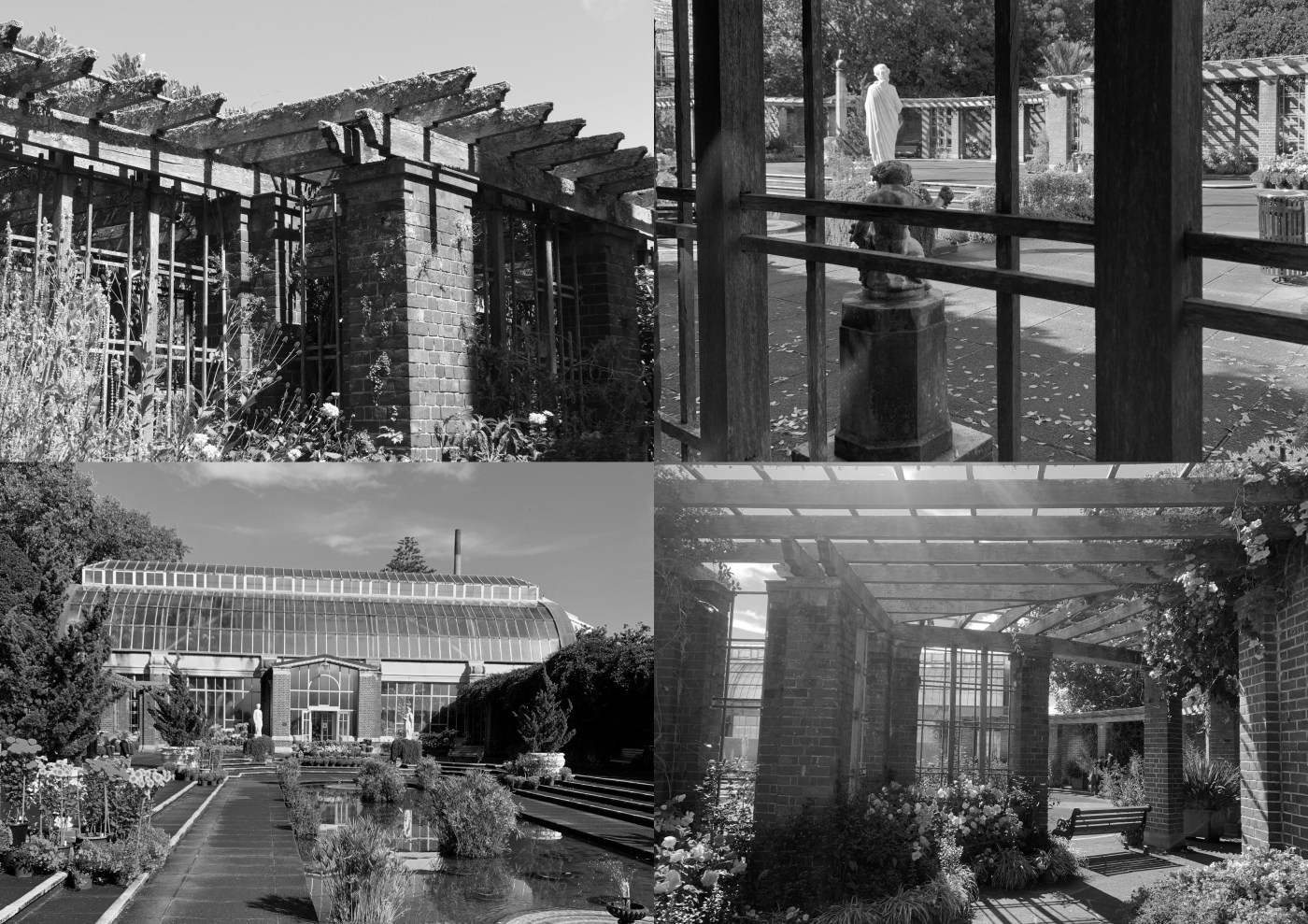
Over the mid semester break I began to think about what it was in the site that really interested me and how I could work with that. Using my mind map I was able to connect some ideas and settle on what captured my attention the most which was framing. I had noticed that there were many elements at the site which were framed in some way and wondered how I could alter this framing or rather re-frame the site. With this in mind I started to write a draft of my positioning statement incorporating some of the other keywords from my mind map.
Positioning Statement first draft:
The Wintergardens are a site made up of framing. Every major element within the space is framed or bordered, giving us a sense of what is considered important. My work aims to explore further the idea of framing and why we might cast a certain lens onto some aspects of a work and not others. There are several meanings to framing but the two I am most interested in are the framing of an artwork for protection and enhanced aesthetic and the framing of a person. This is usually done to protect someone or something, it’s an act of giving up one thing for another and is often fake and misleading. It also conveys a sense of superiority and inferiority which my work will look into.
The gardens were constructed in an Arts and Crafts style and carry with them a sense of romanticism. Entering the space from Auckland’s urban landscape is almost like stepping back in time as you take in the steel and glass, greenery, greek inspired statues and repeated, symmetrical geometries that aren’t too often found in modern architecture. The space is open with no guided way to view the collection and for me this makes the area feel relaxed and laid back but also reduces the impact of the exhibited plants.
I would like to go against this with my design and add an element of tension into the site by creating more defined and structured ways of viewing or ‘lenses’. My work also aims to twist the norms by framing the viewers as well as the exhibit. The framing and proportions used will challenge usual viewing compositions creating a more interactive exhibit in which the viewer actively seeks out the viewpoints. Lighting and shadow will also be used as an assisting element in bringing areas to life or hiding them away.
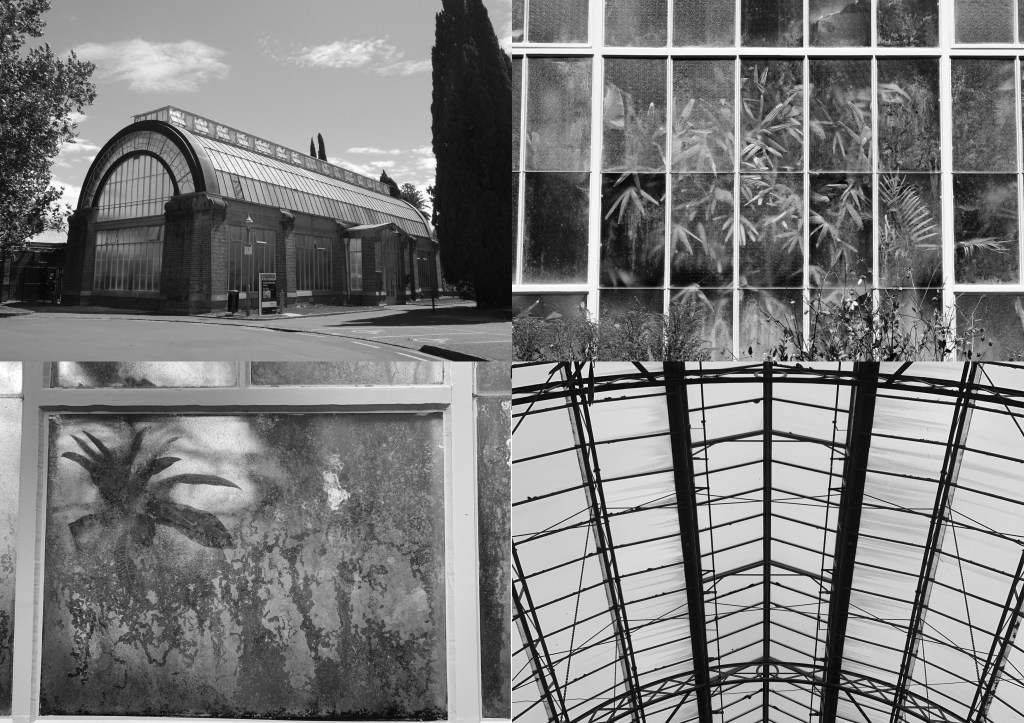
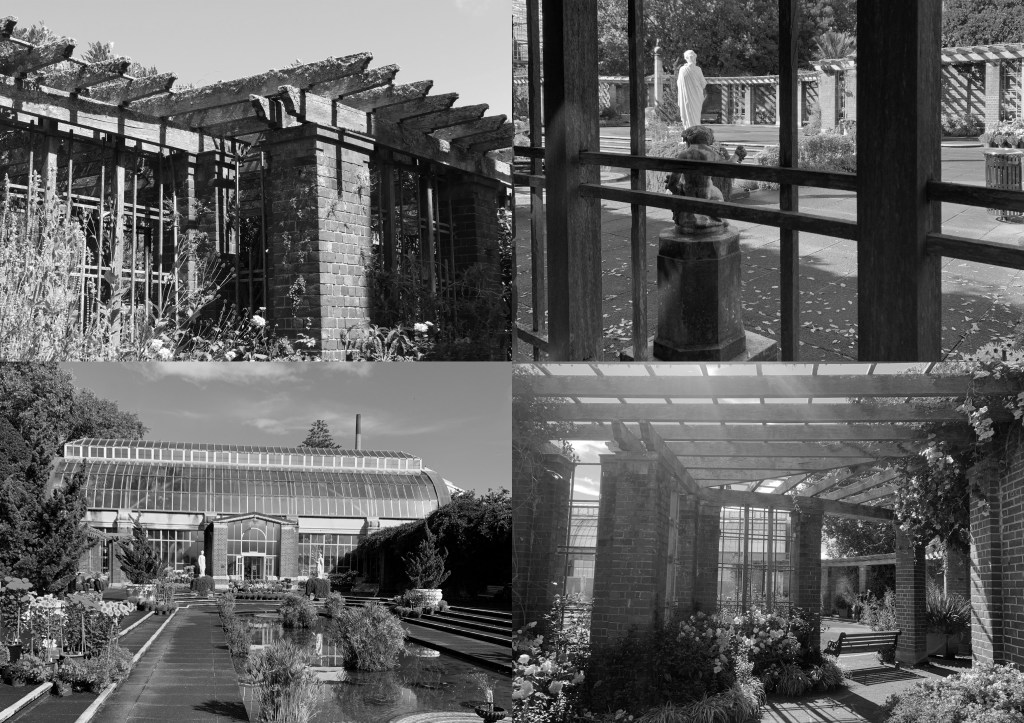
Looking back through images from site visits I pulled out the areas where framing was evident to think about how I could re-frame this and what possible designs I could introduce to the space. I wanted to create something that would frame the people viewing the space as well as the space as well, sort of something that almost caged in the viewer more than the view. Re-framing what is the actual view in a way. From this I began to draft some plans to show to my study group in our peer review sessions.
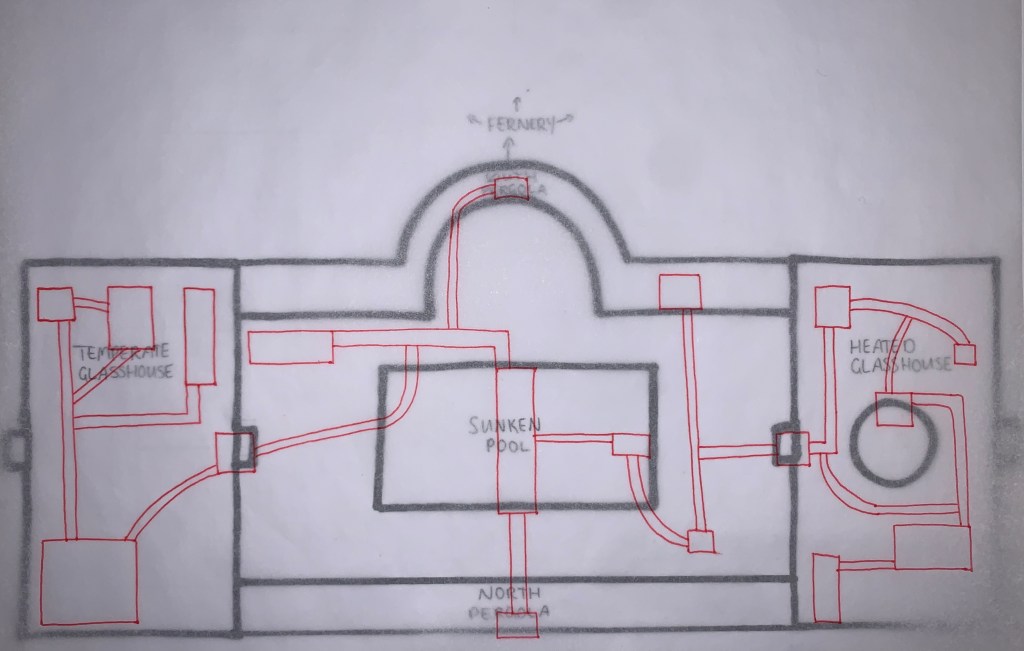
Plan Iteration 1 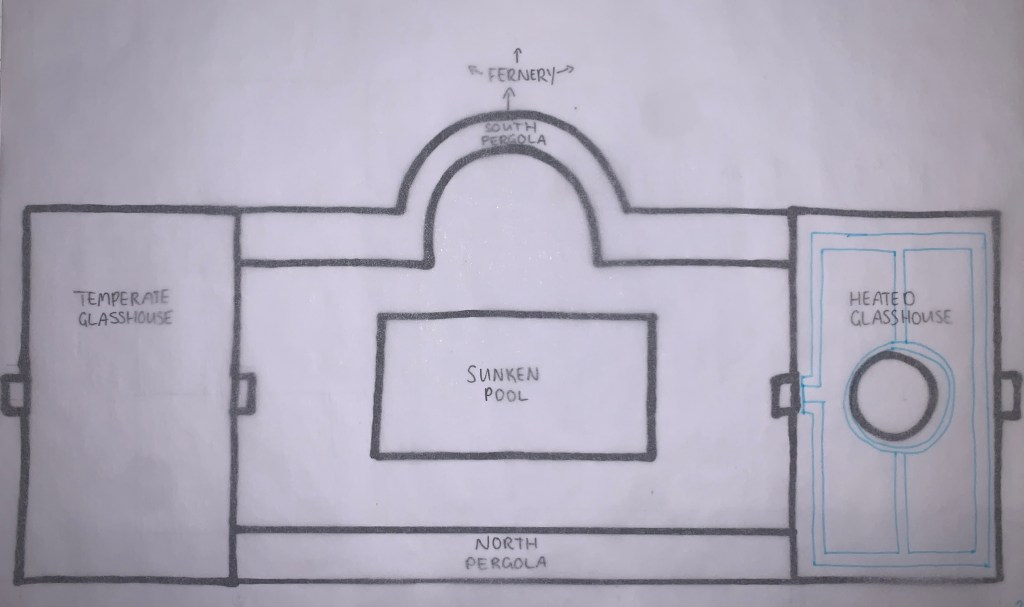
Plan Iteration 2 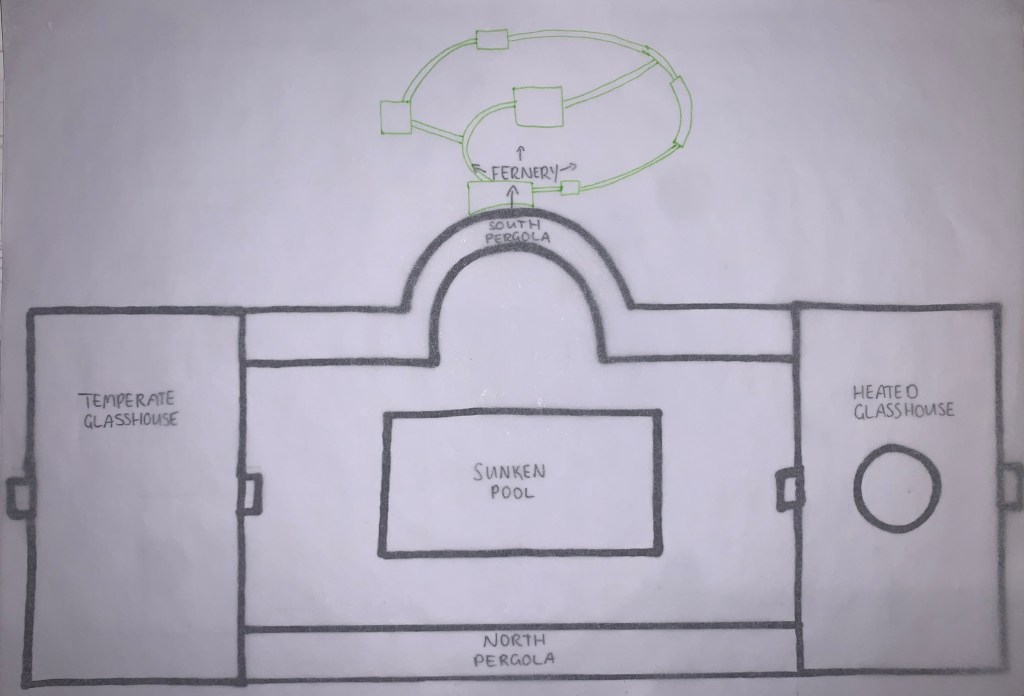
Plan Iteration 3 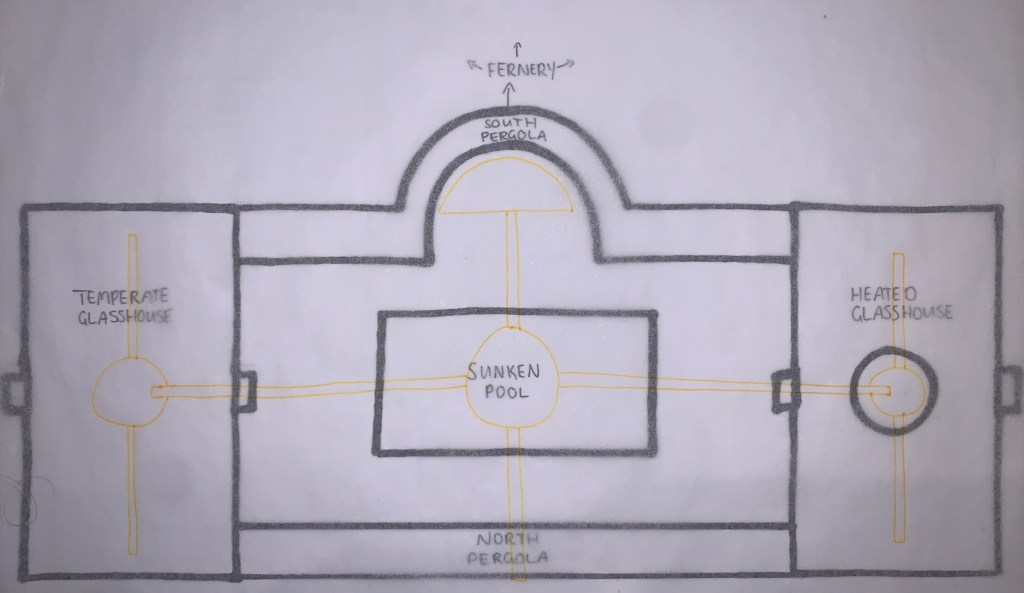
Plan Iteration 4
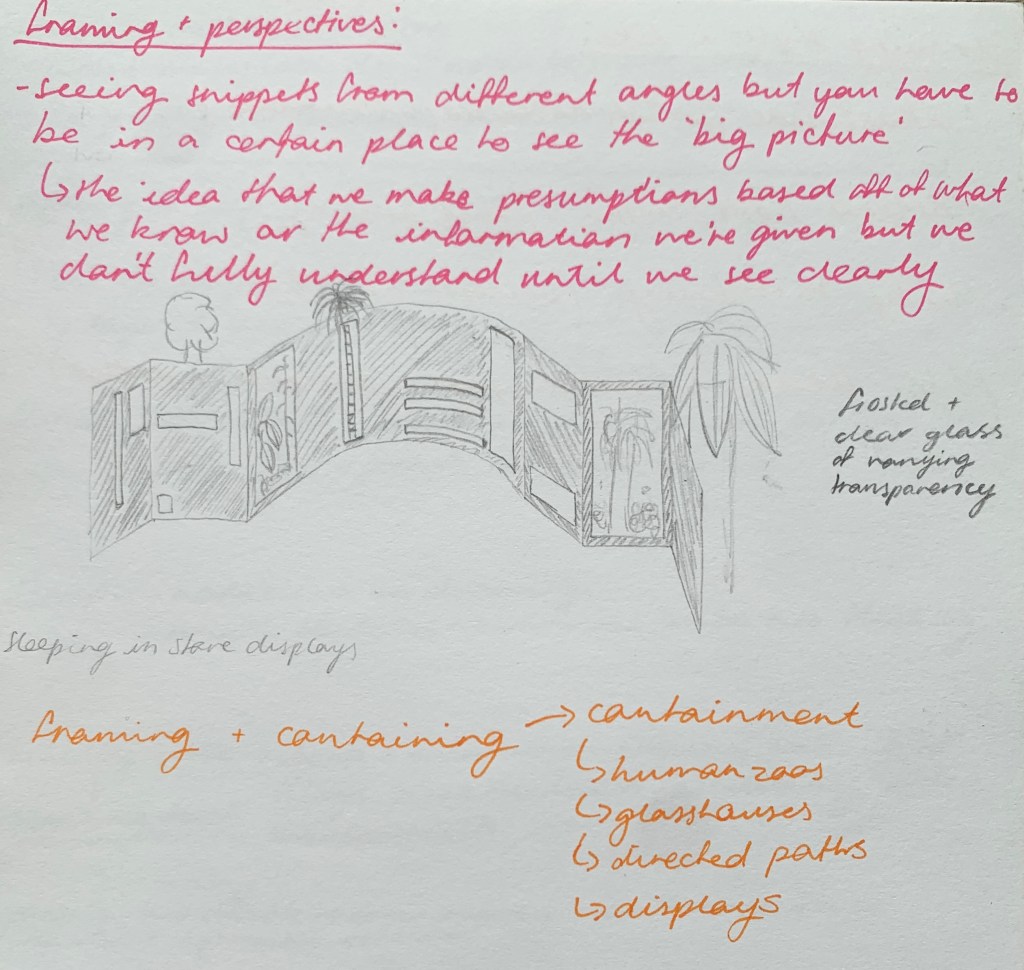
In these initial plans I imagined the structure would be made of glass of varying opacities. As you moved around the space you would be presented with snippets of clear glass framing a certain element otherwise the glass could be fully frosted or semi transparent. The thought behind it was that we often make judgements based off of the information we are given without always seeing the big picture. through combining the opacities of glass and the smaller or larger viewports it eventually creates a “big picture” of the space for us to view. This would also allow me to specifically frame areas of the site instead of being able to see it all in one go.
The images below show initial sketches imagining the space with a directed path through the glasshouses. A fully enclosed path made of glass. Within the box you are both the viewer and the view.
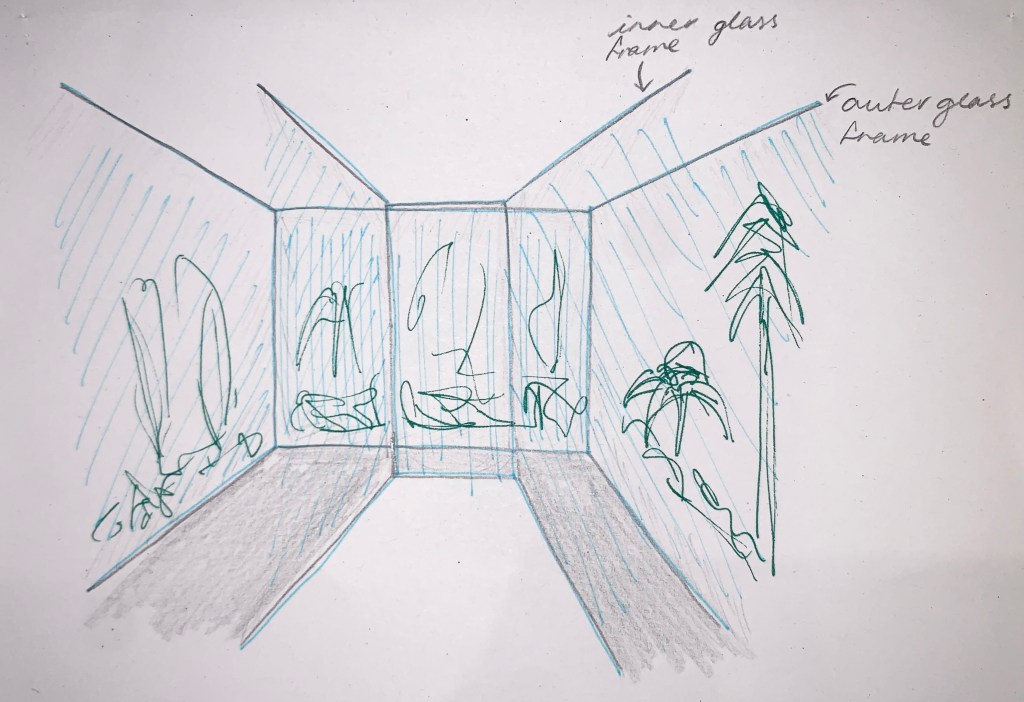
After some of these initial sketches I looked for examples of framing people as I imagined this being part of the way I would re-frame the site (twisting the viewport from the plant to the people). The closest thing I could find was the displaying of people for others entertainment, performance art pieces but also the incredibly dehumanising human zoos that were present in the 19th and 20th century. I found several performance art pieces in shop display windows, where the artist or performer is visible for those passing by and the work is often in reaction to those people who stop to view. I also looked at American illusionist, endurance artists and extreme performer David Blaine and the 44 days he spent suspended in a glass box by Tower Bridge, London. These only connected to my work on the display of human level, other than that there wasn’t much contextually that worked with what I wanted.
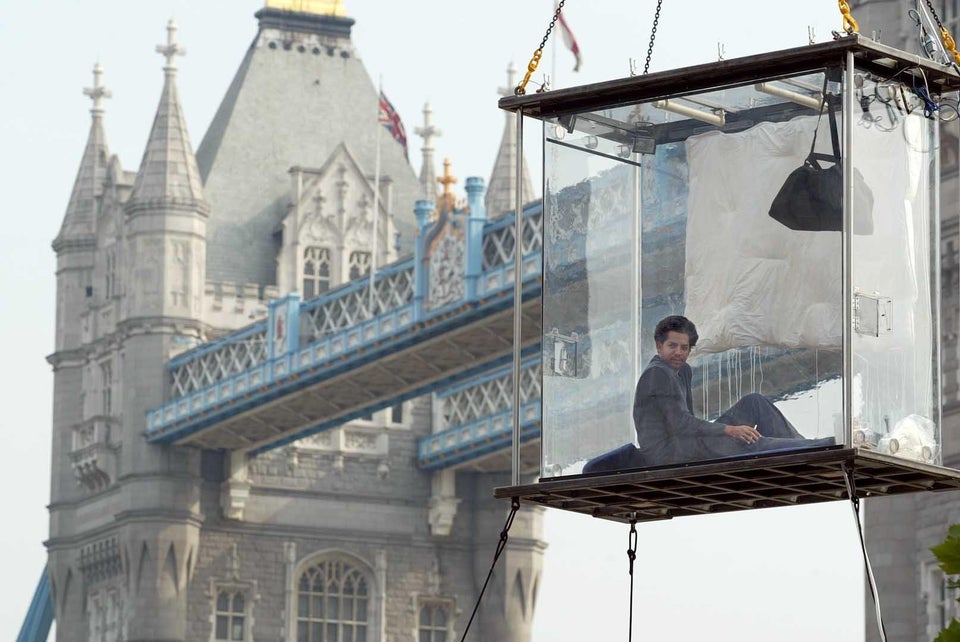
David Blaine Glass Box Stunt, London
Retrieved From: https://www.reddit.com/r/pics/comments/d4o32v/american_magician_david_blaine_suspended_in_a/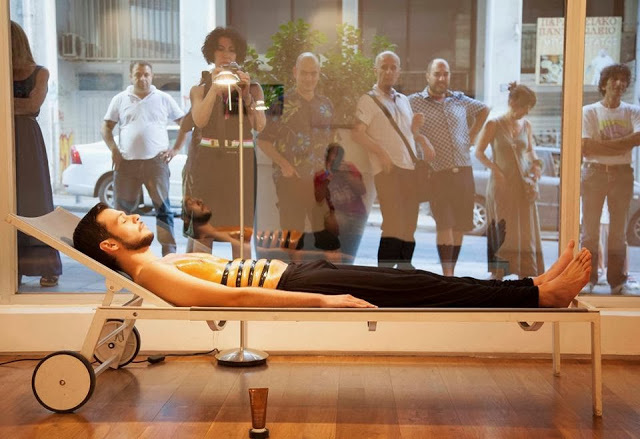
DIS-PLAY Window Shop Project, Athens
Retrieved From: http://cargocollective.com/juliabrown-spatialdesign-ihiwehi/Window-Display-Performance
I stumbled upon human zoos during this research and decided to look further into them. Human zoos were public displays of people during the 19th and 20th century. These people were often incorrectly labelled and shown in ways that were demeaning, dehumanising and derogatory. The Idea of human zoos was the take people from their native lands to show in western societies, often shown in world fairs and later transitioned into sections of animals zoos. Here they were often put in exhibits made to mimic their ‘natural environments’, including animals. This practice lead to stereotyping and prompted scientific racism as they were classified as more or less civilised on a scale from great apes – western europeans. All of this was done to emphasise the superiority of western cultures over the lands that they colonised. At the time it was said to be ‘educational’, used as a way to show ‘European evolvement’.
A Paris museum exposed the history of the Human Zoos with their exhibit “Human Zoos: The Invention of the Savage” (2011/12) in which they aimed to educate the public further on the reality of what was once a popular form of entertainment. More information can be found at:
https://www.dw.com/en/paris-museum-exposes-history-of-human-zoos/a-15588660#:~:text=A%20new%20exhibition%20in%20Paris,’
The Glasgow School of Art Students Association alongside the Cultural Engagement Public Lecture Series put on an exhibit “Putting People on Display” (2018) which was a paired back version of the exhibit in Paris.
“This seminar will present the panels on display for the public to view ahead of an afternoon of presentations and discussions surrounding some of the issues that the histories, display practices, national/local contexts and contemporary readings of these events, practices and relationships carry with them. The exhibition panels, which cover a range of historical periods, geographical locations and national contexts, raises many questions about putting people on display, and the forms of observation these practices involve. Drawing on the rich iconography surrounding the phenomenon, it also forces us to address the ethics of display and the extent to which access to often challenging imagery is essential to understanding this historical practice and its contemporary afterlives.” – Text retrieved from: https://www.gsa.ac.uk/life/gsa-events/events/p/putting-people-on-display/
The reality of these Human Zoos isn’t something that can be made light of. With all this in mind I began to question if me looking at framing people in my work (in what could be considered a similar way) would be seen as making a joke of or being insensitive to a very serious, hurtful and dehumanising situation? Human Zoos helped to shape racist attitudes that are still ongoing today and I don’t want my work to be seen to be celebrating or supporting this in anyway? Is it possible for me to use something like this to inform my work in a way that doesn’t come across as insensitive or uneducated? The more I thought on this, the more I decided it didn’t feel right for me to use this in my work. However there was one aspect I felt I was able to draw on; the superiority/inferiority evident in the ranking of people. Superiority and Inferiority came up in one of the meanings of framing I was interested in. When framing someone for a crime you give superiority to the person you are protecting and inferiority to the person you’re framing. This connection is something I will take forward in my work.
 Spatial Design
Leave a comment