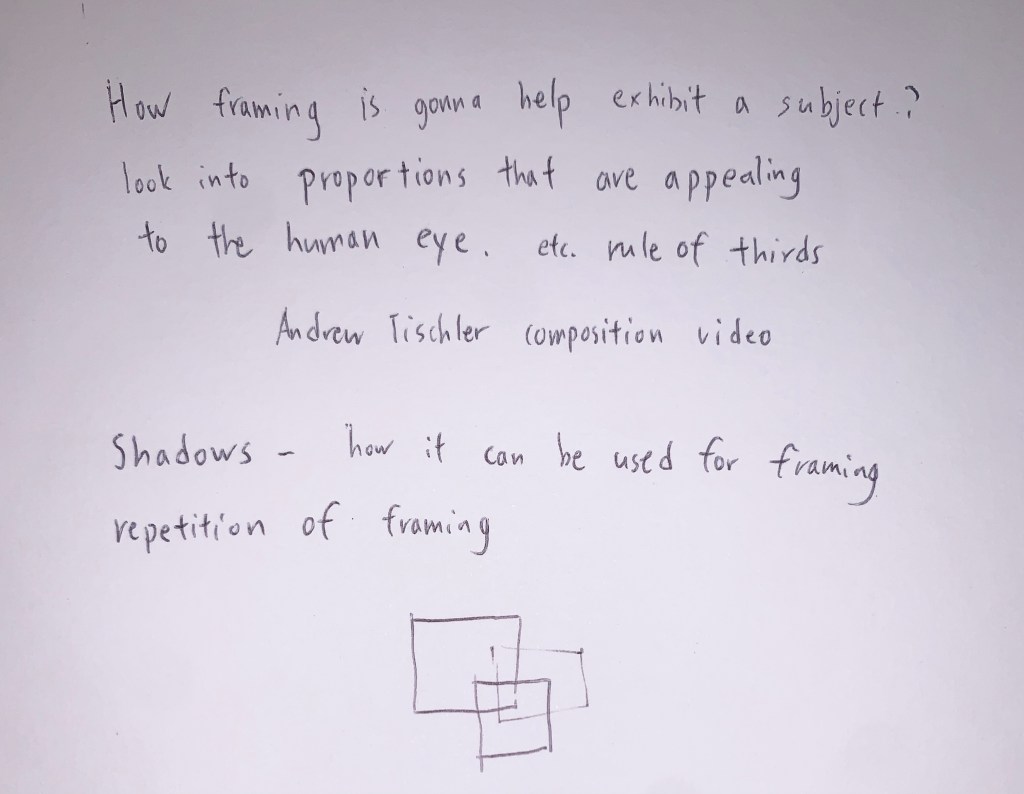
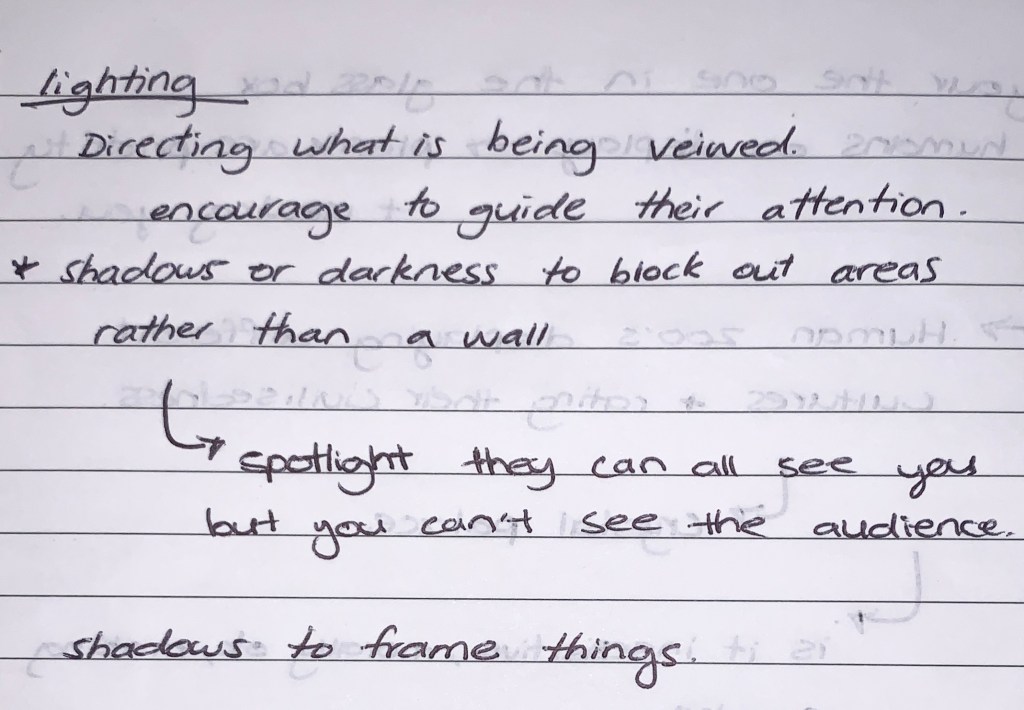
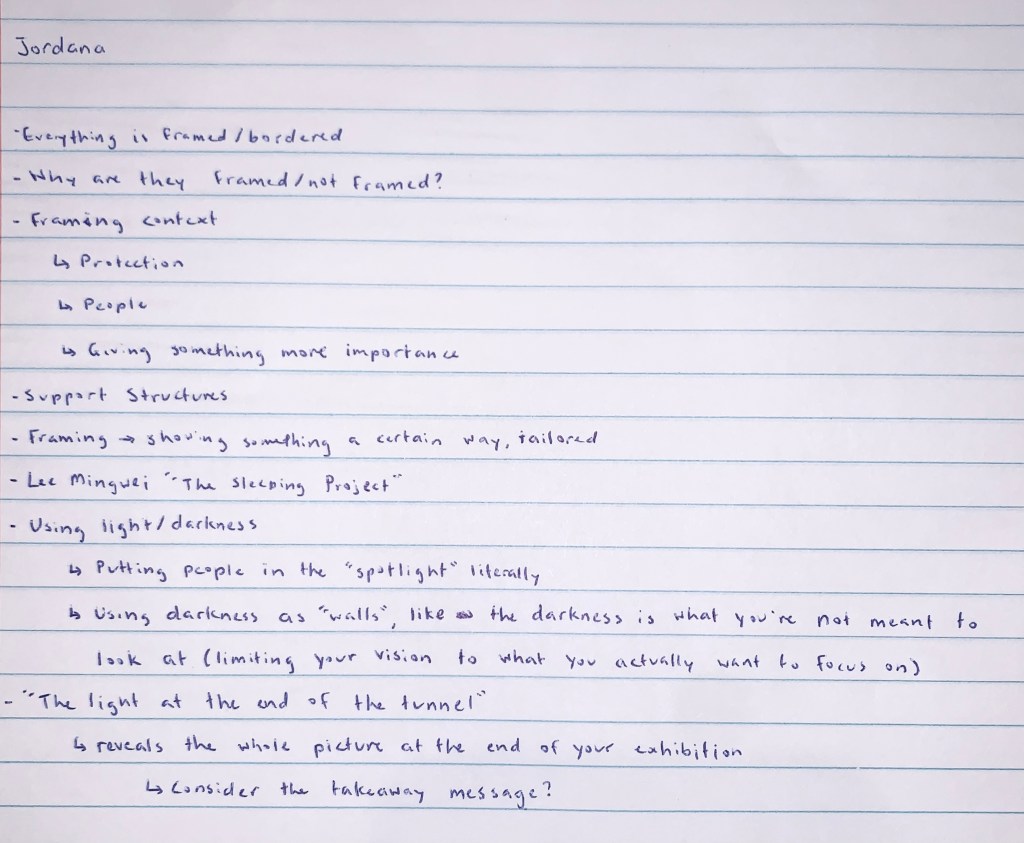
Peer reviews were useful for getting feedback from our study groups. I found being able to run ideas I was unsure about past someone else really helped me with the direction of my work. Discussing with others also helped the work grow as they could offer a fresh perspective to something I may have been struggling over for a while. Below is some of the feedback I received from these group discussions. The most valuable feedback I received was through conversations with the others in my study group in which we would all bounce ideas off each other. I think these group discussions are very important as they help us learn to take on constructive criticism and we get better and better at communicating our ideas the more we talk through them.
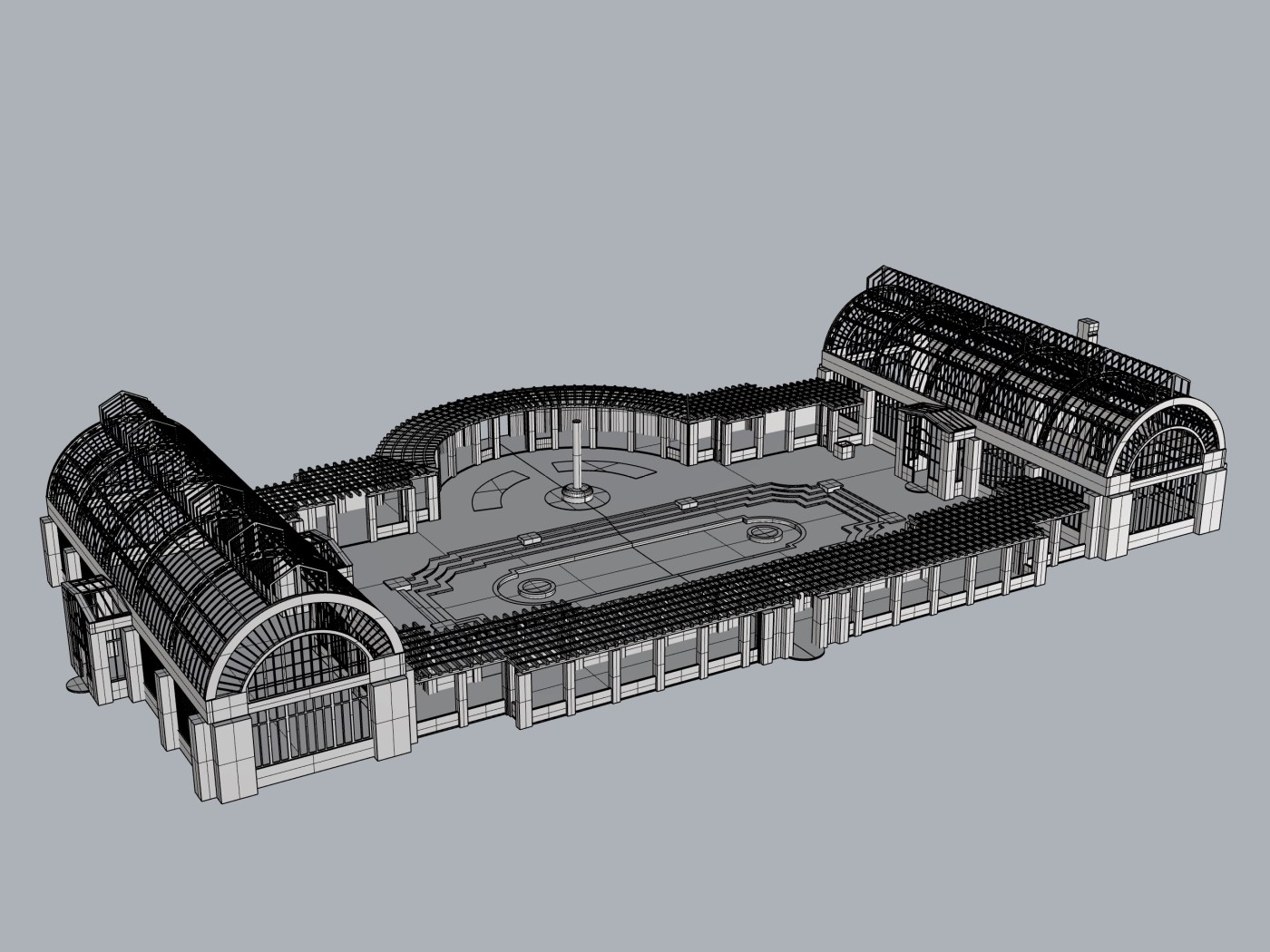
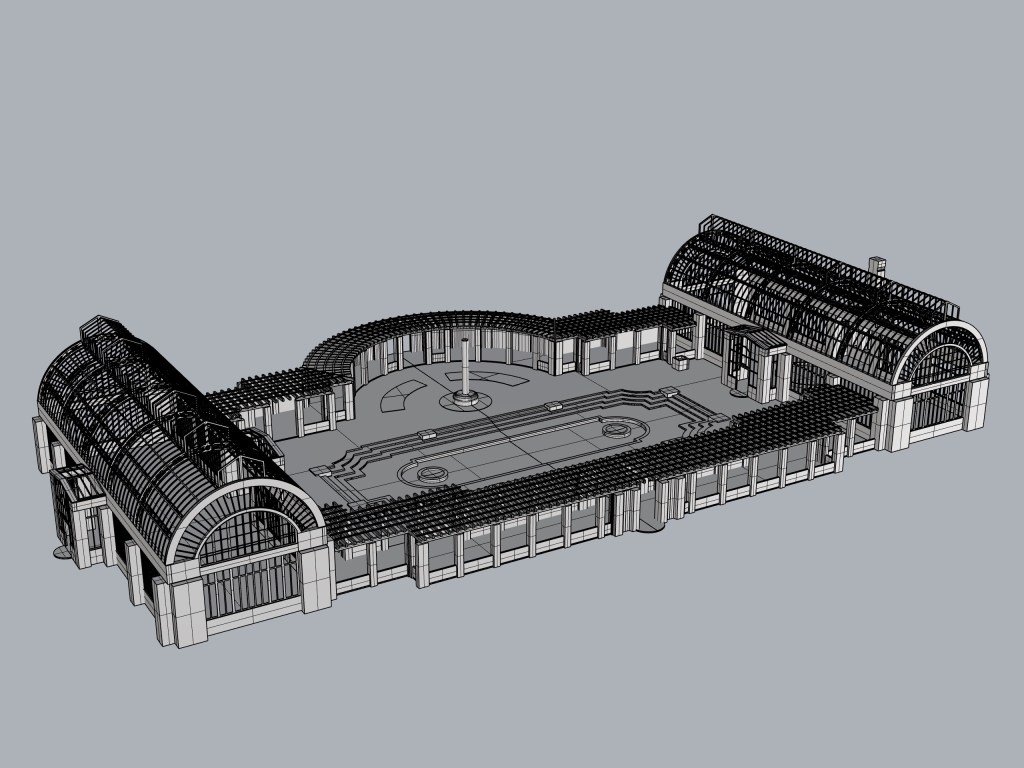
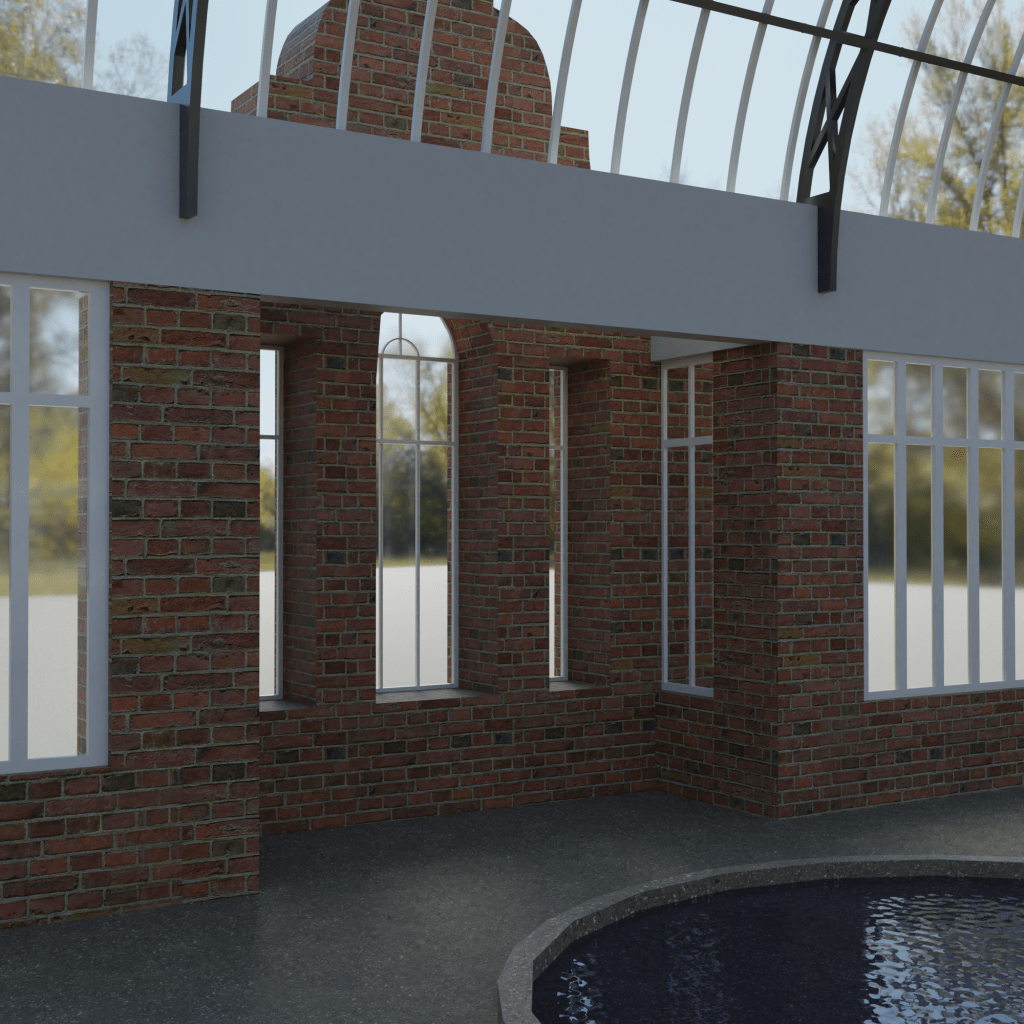
Alongside figuring out my design I had began to build a digital model that could be used for plans, sections and renders. I could also use this to create a physical site model if needed. The digital model was made over several weeks using a combination of Revit and Rhino for the structure and Blender for materials and lighting.
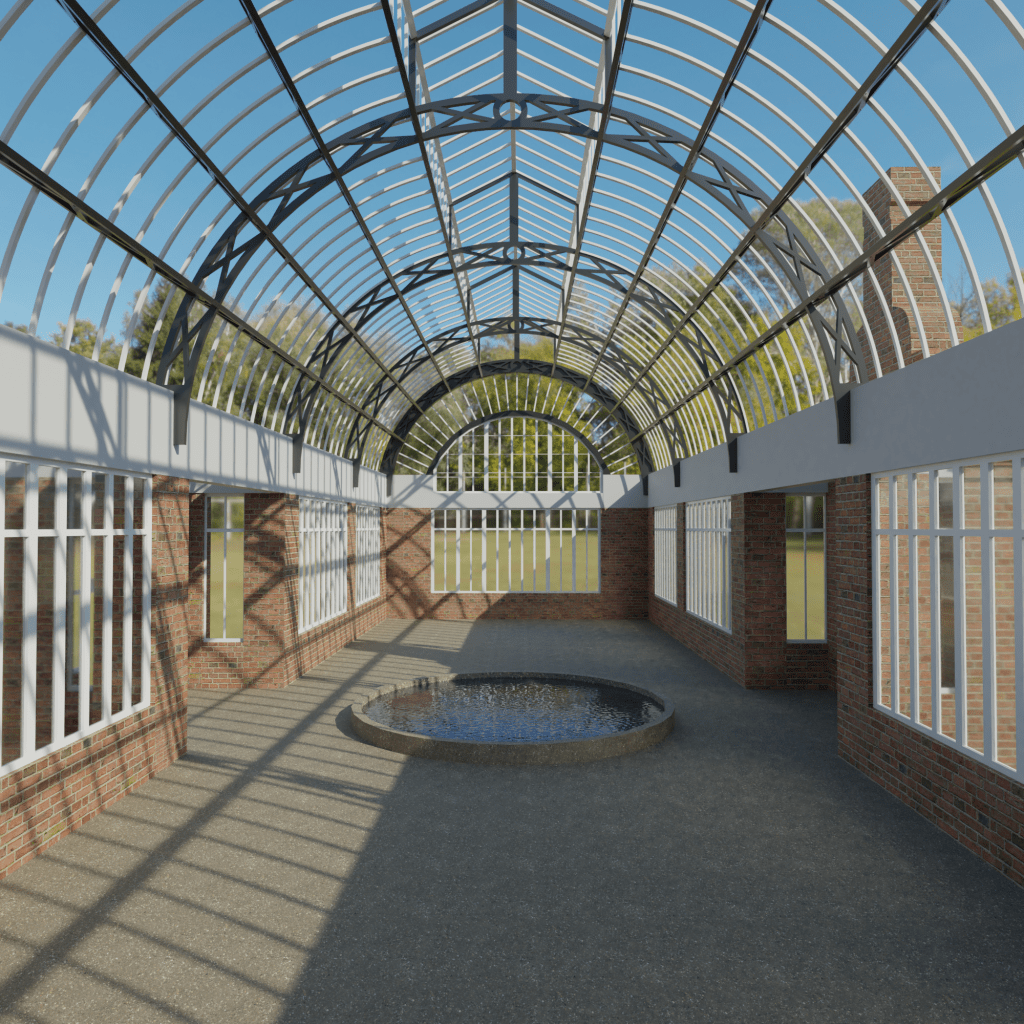
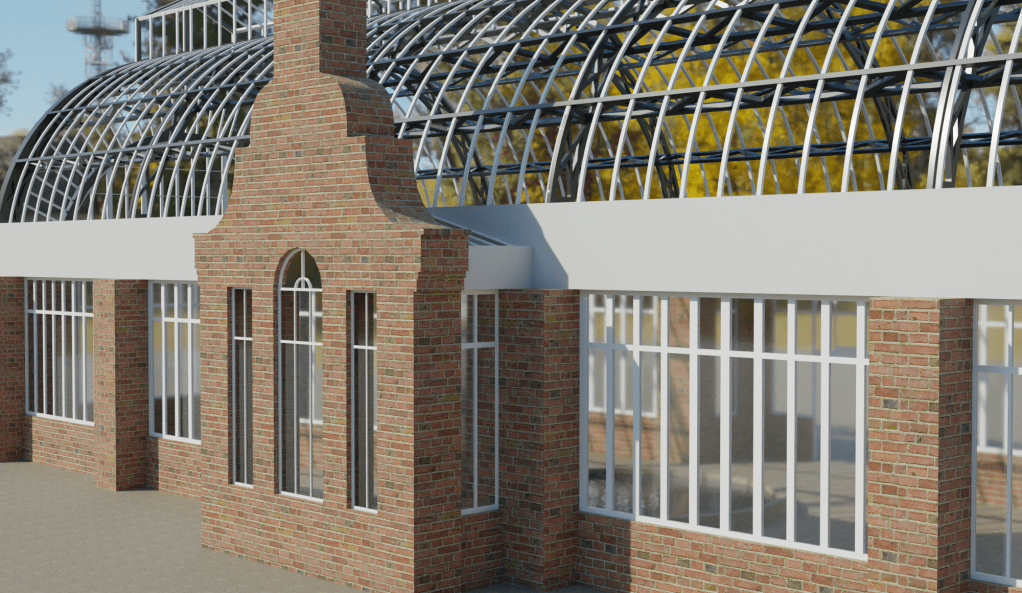
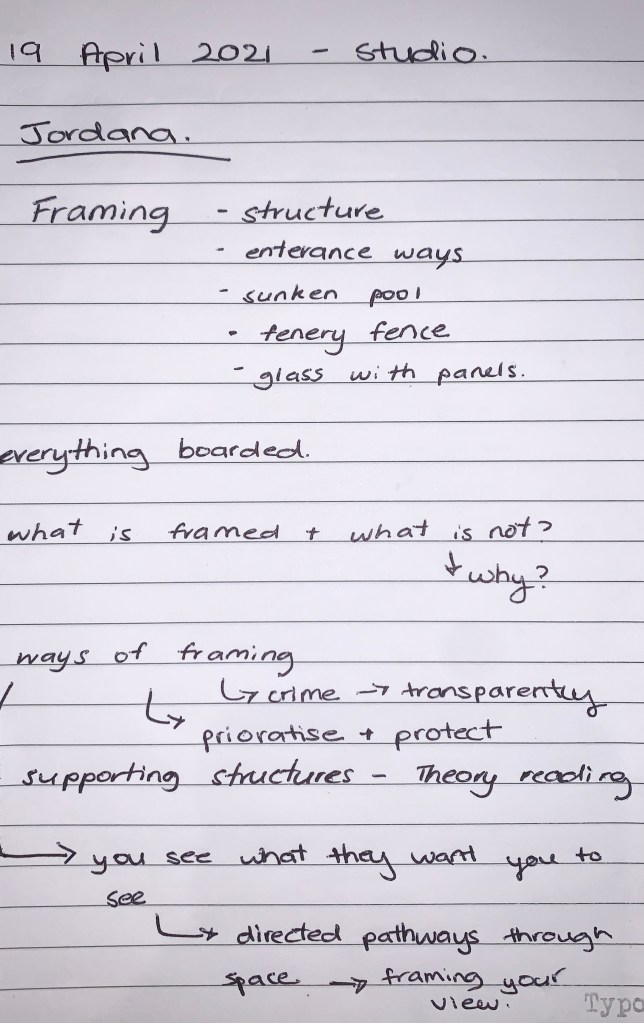
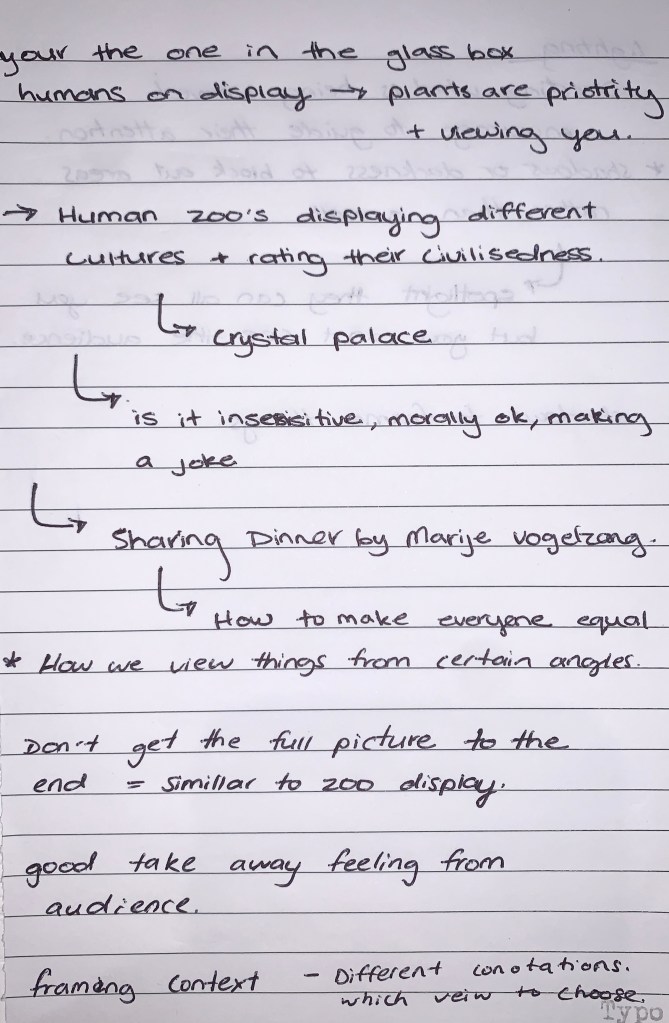
Over weeks 6 and 7 I focused on working towards the formative assessment in week 8. I was still unsure what my design would be and was feeling slightly overwhelmed that I didn’t have a solid design idea I liked. I also struggled to convey my thoughts to others and found that in several 1:1 discussions with peers and even lecturers my ideas were being misunderstood. Reflecting on this I quickly realised this issue stems from me not being clear and concise with my design and what my focus is. At this stage I started to panic a bit, I was unsure how to say what I meant in a way that other would understand and I felt as if I was starting to get behind.
When preparing work for the formative assessment I went to print some images to help assist with my site context. For whatever reason a group of images printed incorrectly, with a large white banner in the middle, only the edges of the image were visible. Several people asked me about this, thinking it was intentional, and it got me thinking about what if this was in some way the design. By not printing the middle of the image, the printer had essentially de-framed the site for me and I began to think of these prints as a happy accident.
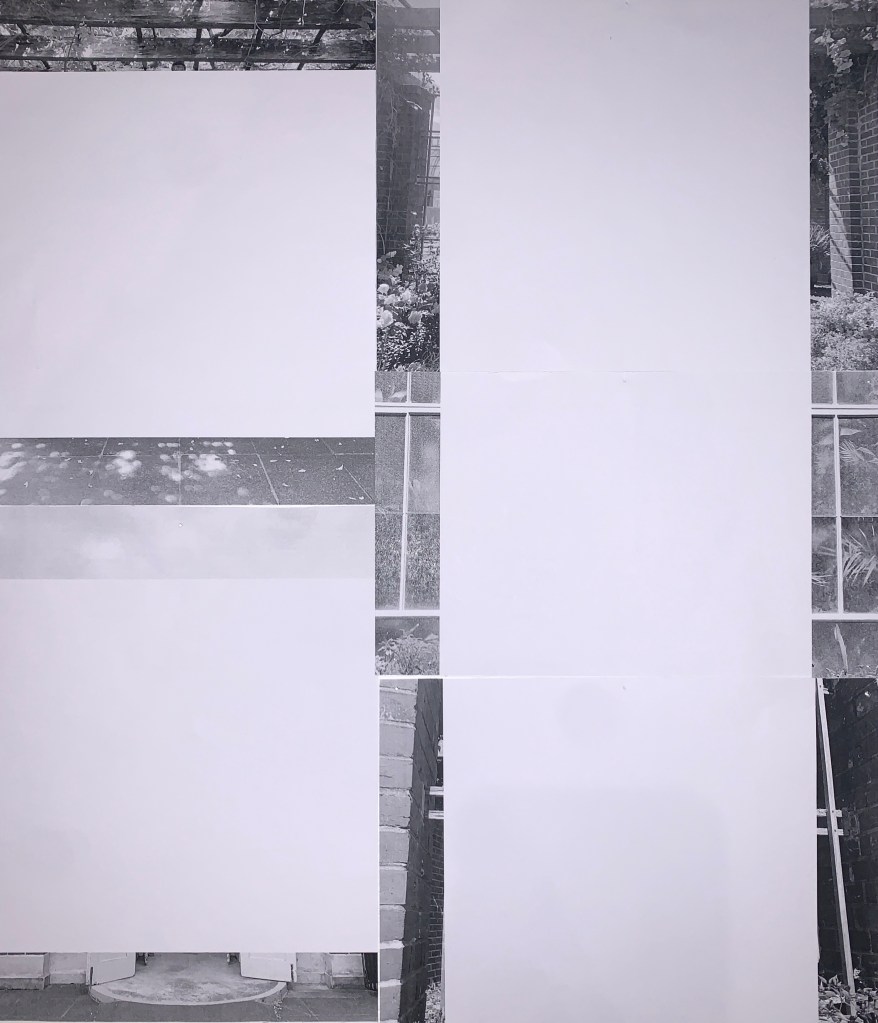
By eliminating the central focal point of the image it draws the viewers attention to other areas and makes them look more purposefully. Instead of looking at the middle and taking in the whole image you have to view from one side to the other without knowing what is in the middle. To me, it creates a sense of intrigue; What is missing, what is behind there? I started questioning whether this could be a design, how would you make it, what would it be made from and what would you eliminate from view?
With this in mind I printed some small images of areas in the site I liked best. Over these images I simply painted what I imagined the accidental prints would look like in situ. Here was my pivotal moment in this project. By covering the eye level view, movement in the space is more directed as viewers looks up or down at the parts that poke out around this screen. A textile screen wasn’t what I had in mind when I started painting over these images but after seeing one I was inspired to do the rest the same and so this textile like screen became my focus.
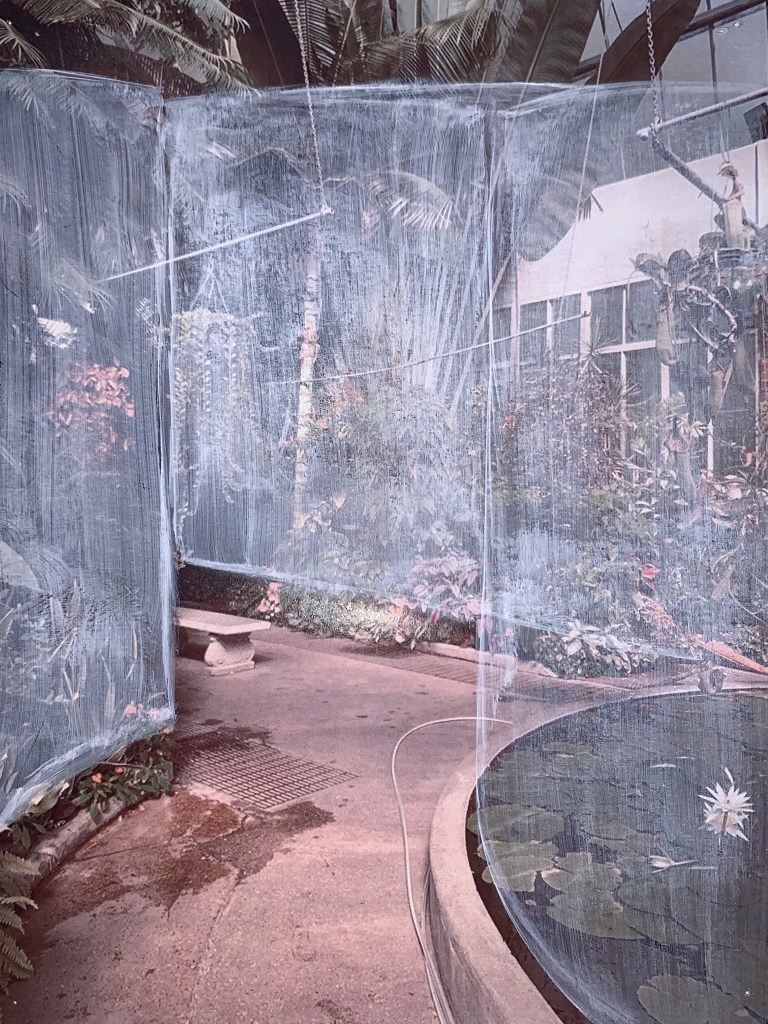
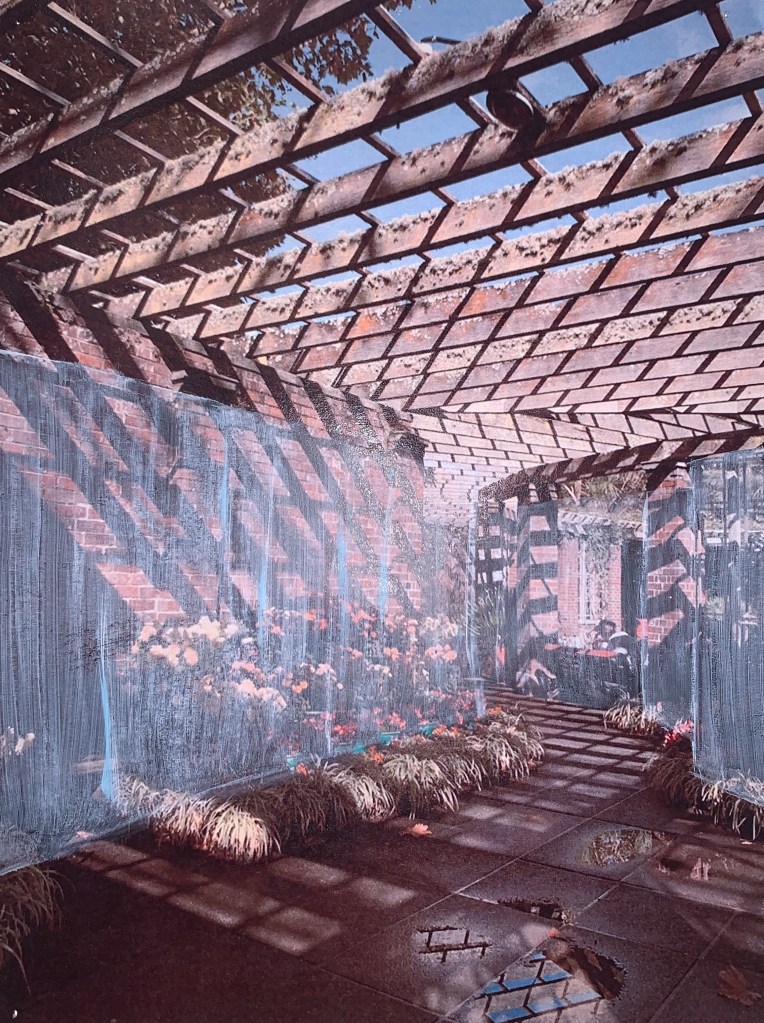
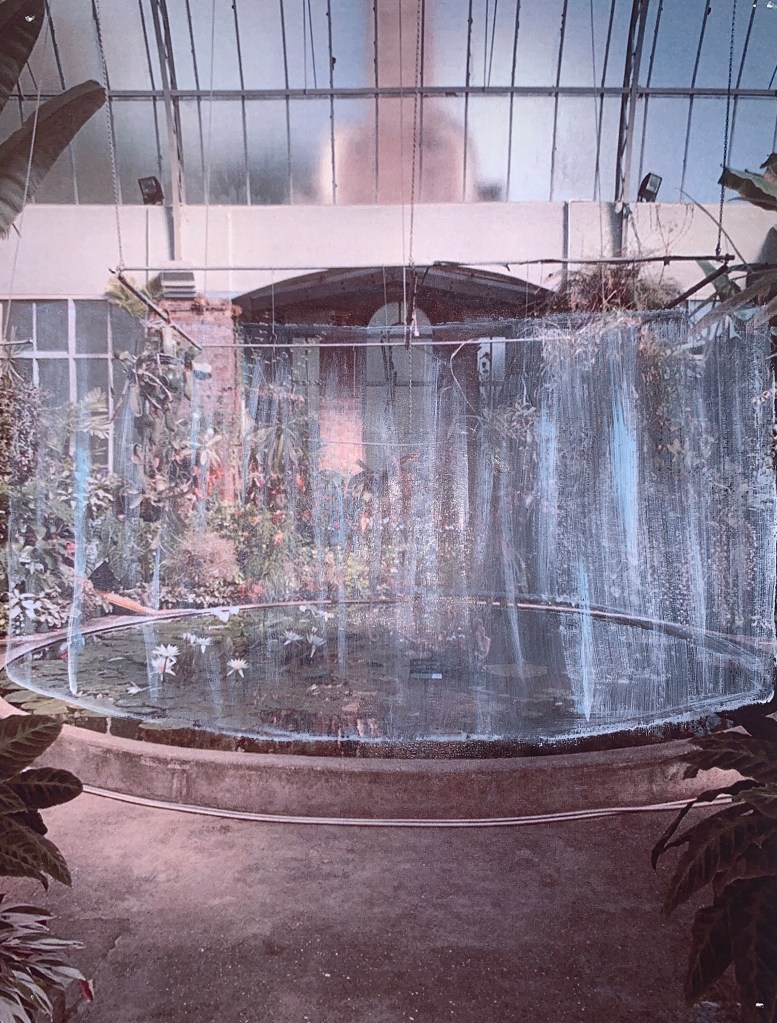
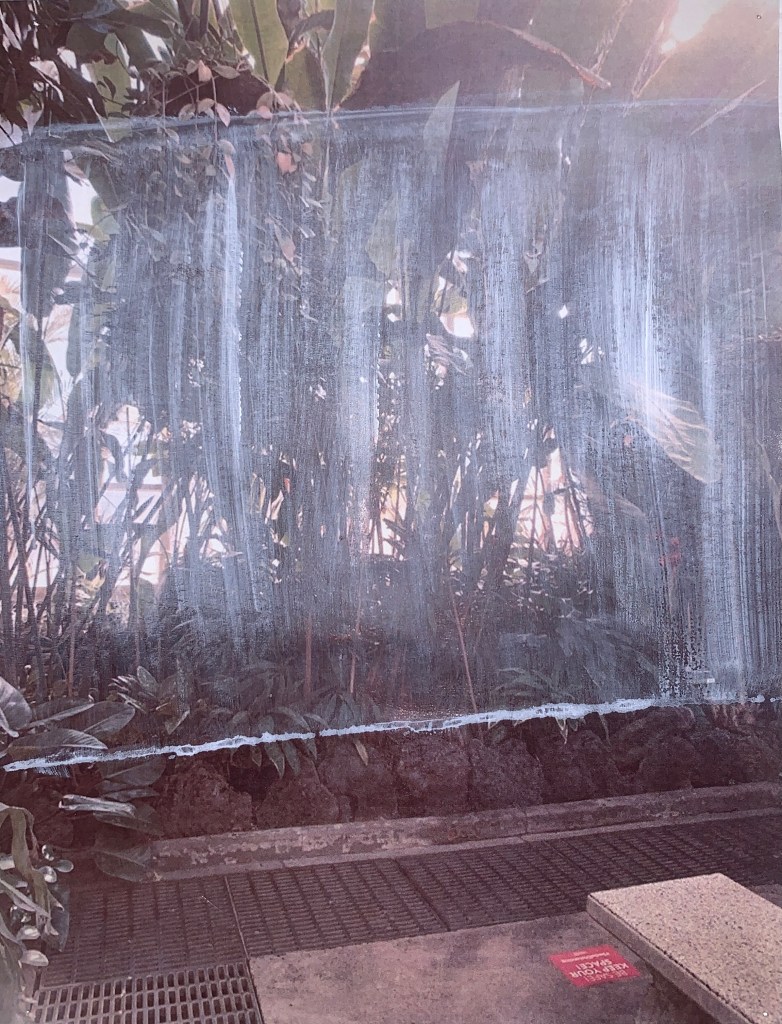
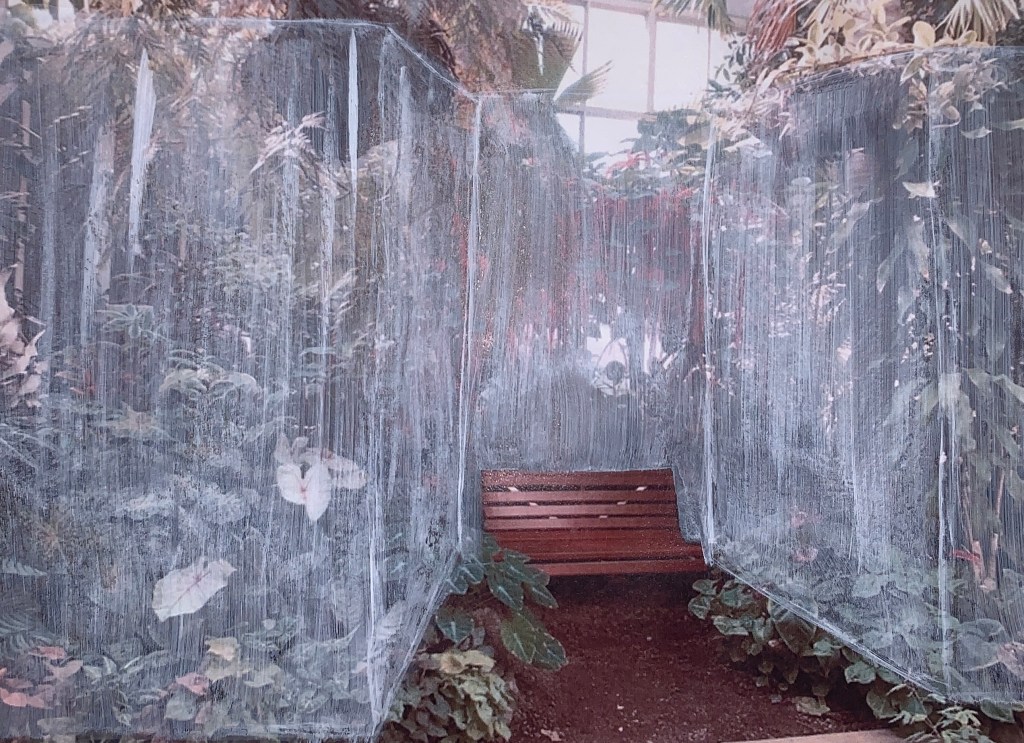
Transparency was another of my key words for the site and I wanted to include this in the design somehow. Net or sheer curtains came to mind when painting these images and I started to think about how they react to different changes in their environment, such as lighting. During the day they act as a barrier, offering privacy for those inside. People inside can see out but people outside cannot see in, not easily at least. At night, when a light is on inside, the opposite occurs. Those outside can see in and people inside cannot see out. I thought this could be interesting to introduce to the site as it would add another element with people being able to view my design at night instead of only the usual opening hours. Textiles aren’t something I’m familiar with I knew I would need to research into them more if I intended to use them.
With this idea now in mind I was able to work on plan and section drawings for the formative assessment. I chose to use the heated glasshouse as well as the southern pergola. I chose the heated glasshouse as I liked the way the taller plants would hang over the top of the curtain and the smaller plants would peep out the bottom. In the temperate glasshouse, most of the exhibit is eye level so if I was to cover it up you wouldn’t be able to see anything. The southern pergola I chose to use as it felt kind of bland to me and I wanted to activate the space more.
 Spatial Design
Leave a comment