
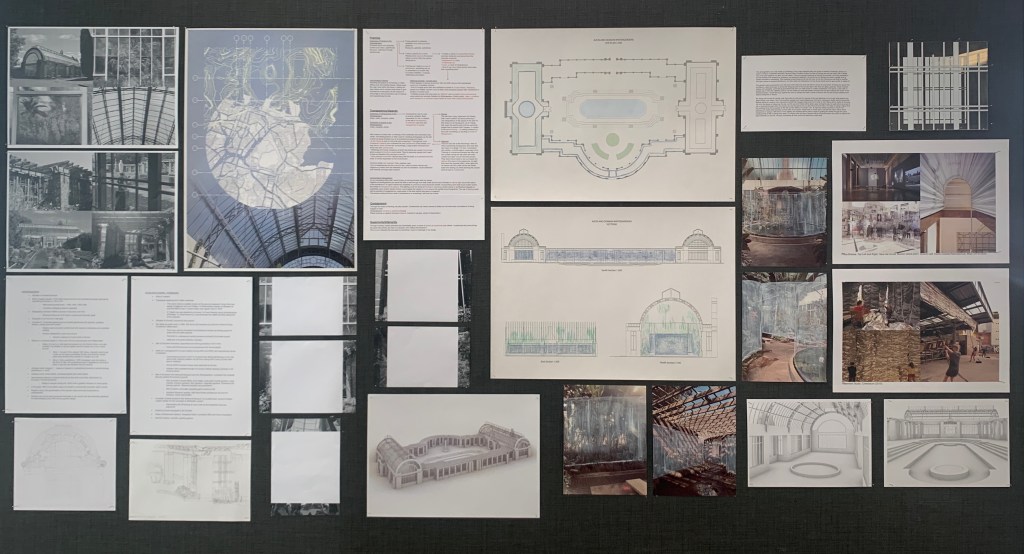
Consisting of site analysis, process work, plans, sections, iterations and inspiration.
Positioning Statement
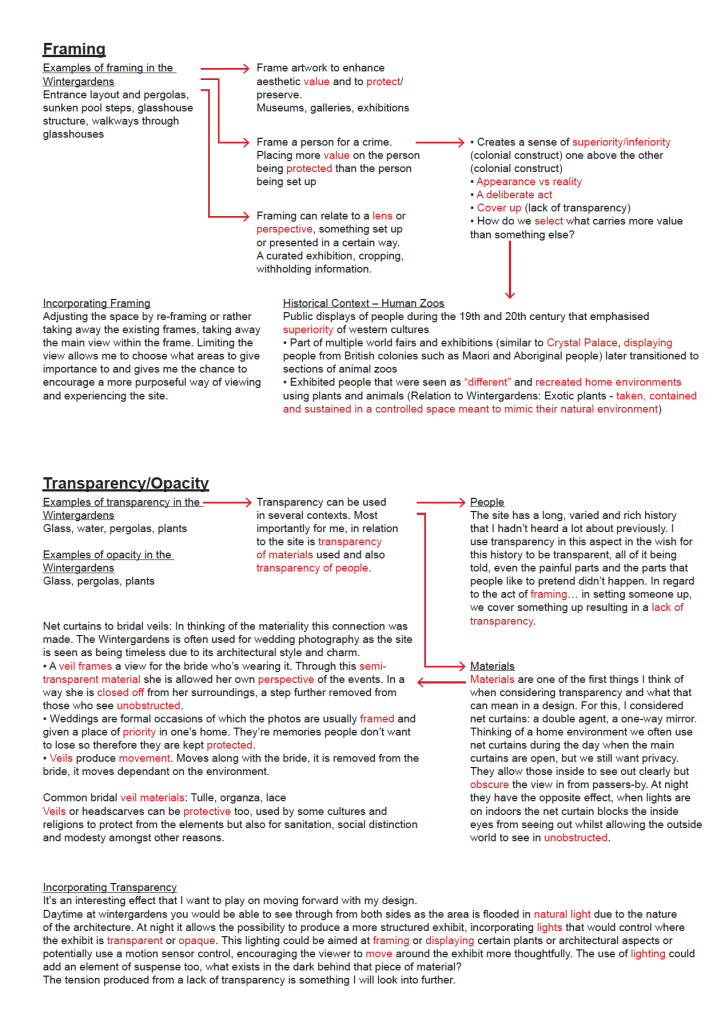
The Wintergardens are a site made up of framing. Every major element within the space is framed or bordered, giving us a sense of what is considered important. My work aims to explore further the idea of framing and why we might cast a certain lens onto some aspects of a work and not others. There are several meanings to framing, the two I am most interested in are the framing of an artwork for protection and enhanced aesthetic, the second is the framing of a person usually done to protect someone or something. This meaning is what jumps out at me the most, it’s and act of giving up one thing for another and has a sense of superiority/inferiority, it’s often fake and misleading, but how do we decide what to give priority or safety to?
The gardens were constructed in an Arts and Crafts style and carry with them a sense of romanticism. Entering the space from Auckland’s urban landscape is almost like stepping back in time as you take in the steel and glass, greenery, Greek inspired statues and repeated symmetrical geometries that aren’t too often found in modern architecture. The space is open with no guided way to view the collection and for me this makes the area feel relaxed and laid back but also reduces the impact of the exhibited plants. I would like to go against this with my design and build a sense of tension into the site through creating more defined viewports or ‘lenses’.
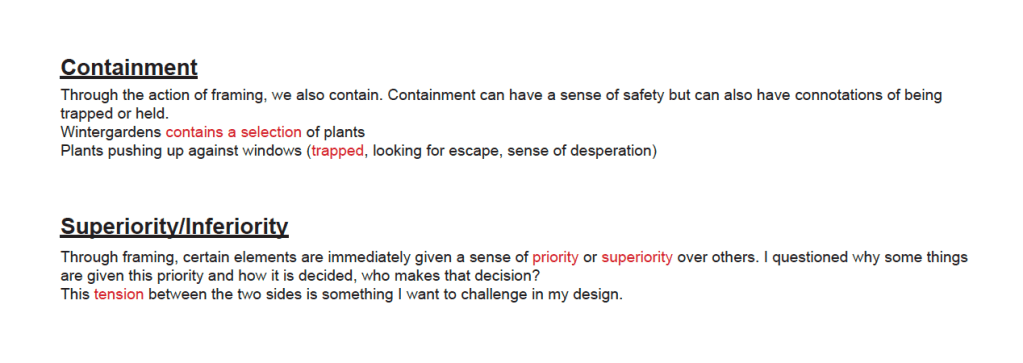
My design will consist of a textile ‘wall’ that works to obscure the majority of the view allowing me to choose what aspects are given priority over others. Set in the Southern Pergola and heated glasshouse, this semi-transparent textile wall will be paired with lighting effects to create a more interactive exhibit that changes dependant on the time of visit. Plants will be visible as they pop out from the bottom or hang over the top, but the eye level frame will be taken away. During the day the wall will act as a sort of veil, a threshold through which the viewer can see the plants but is a step removed from them. This idea of veiling is taken from the weddings that are so popular at the site and the effects of a brides veil. At night the exhibit transforms, thrown into darkness the textile wall becomes a more solid visual barrier. Dependant on where light is situated the fabric will act either transparent or opaque. with this in mind, lighting and shadow will be used to assist in guiding the viewer through the space, bringing areas to life or hiding them away. A constant ebb and flow of tension will be introduced within the space at night as the lights alternate on and off. A human uncertainty at what could exist behind the veiled wall.
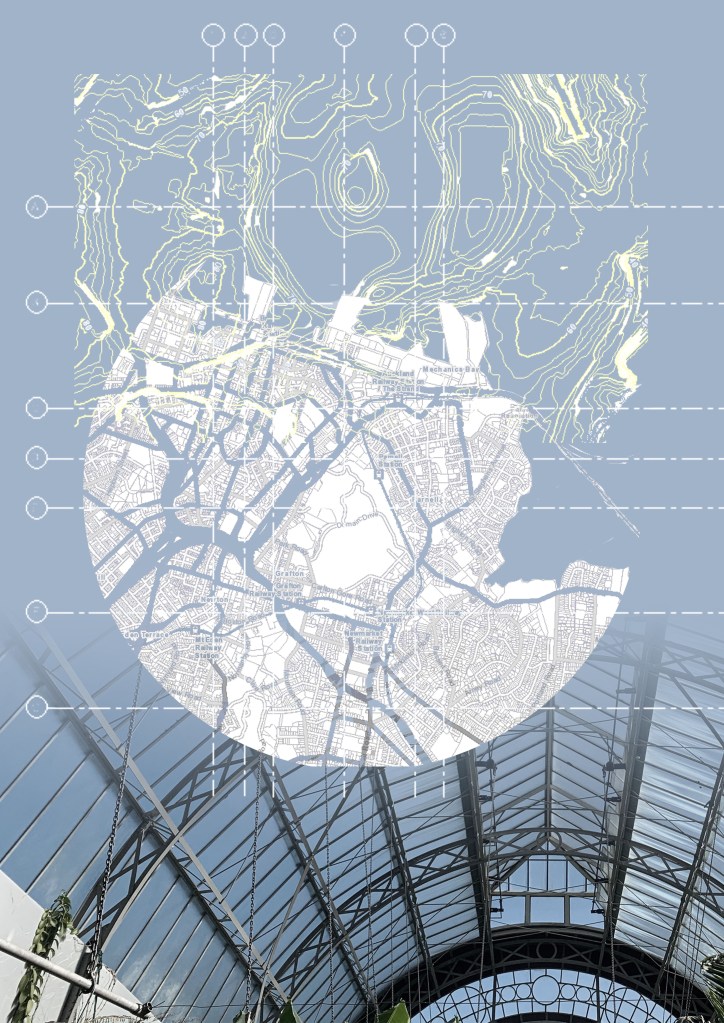
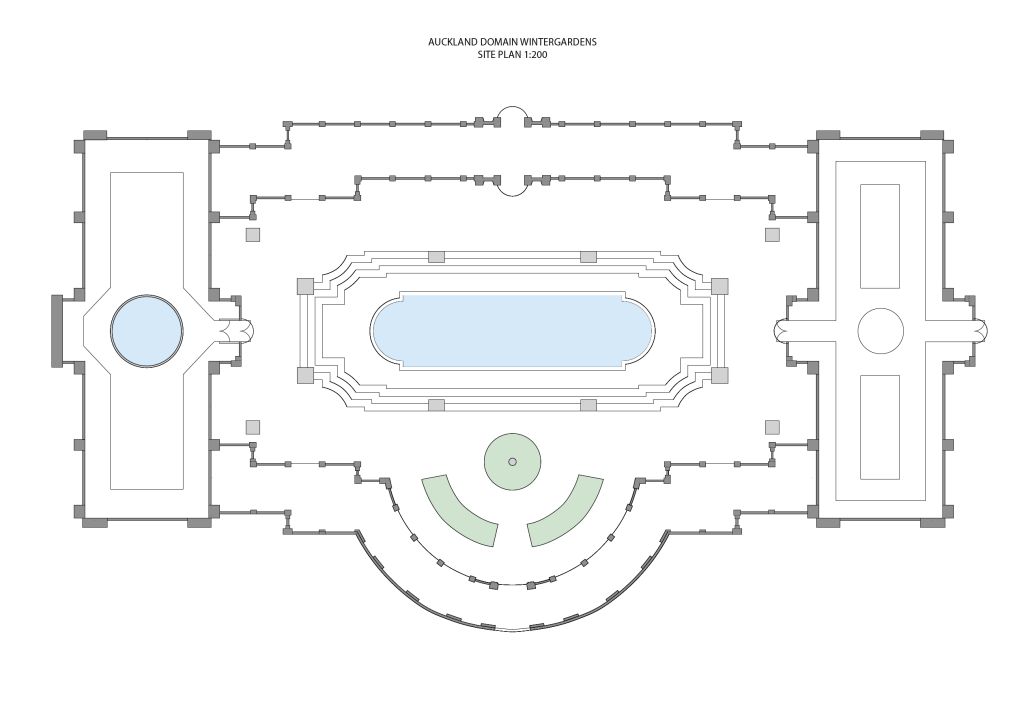
Digital Plan 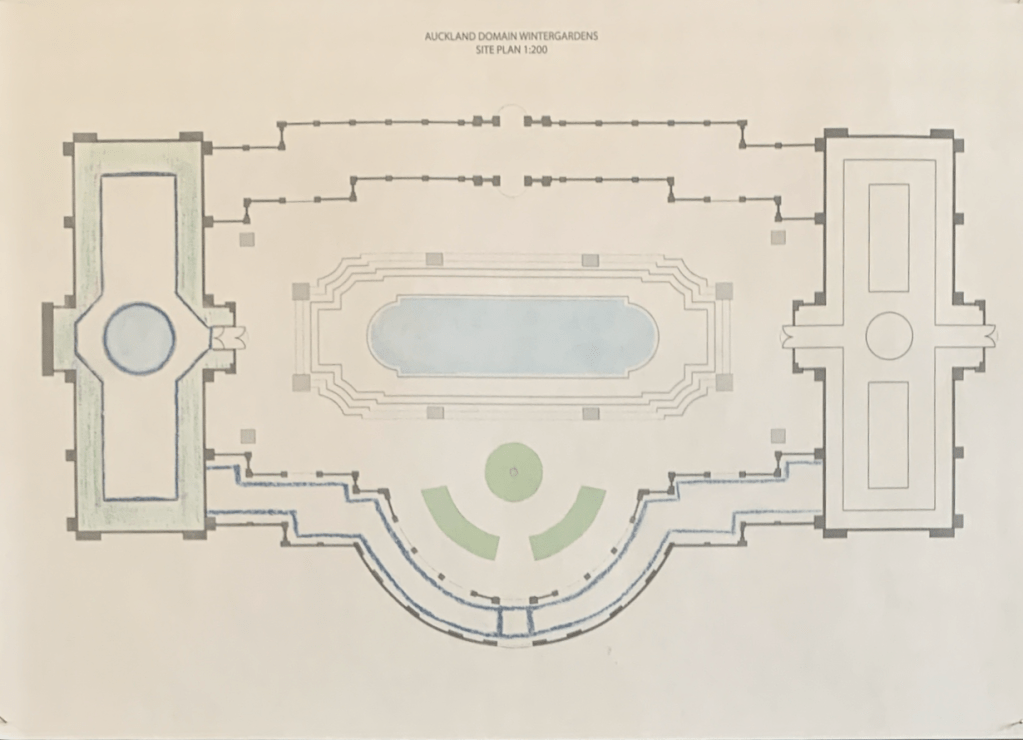
Printed Plan with intervention added
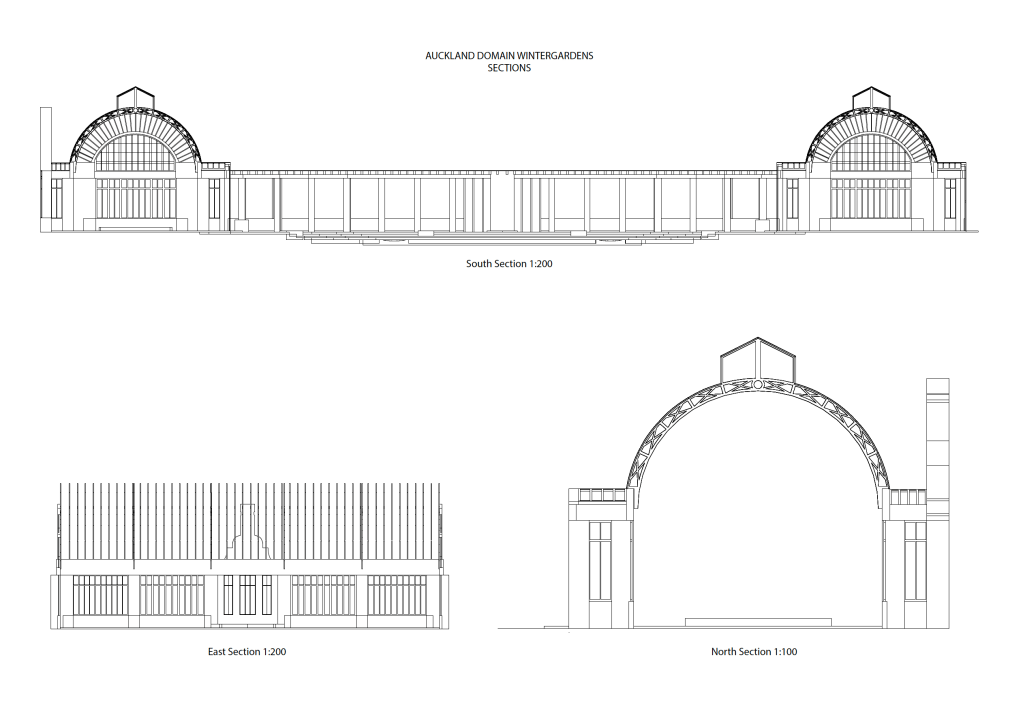
Digital Section 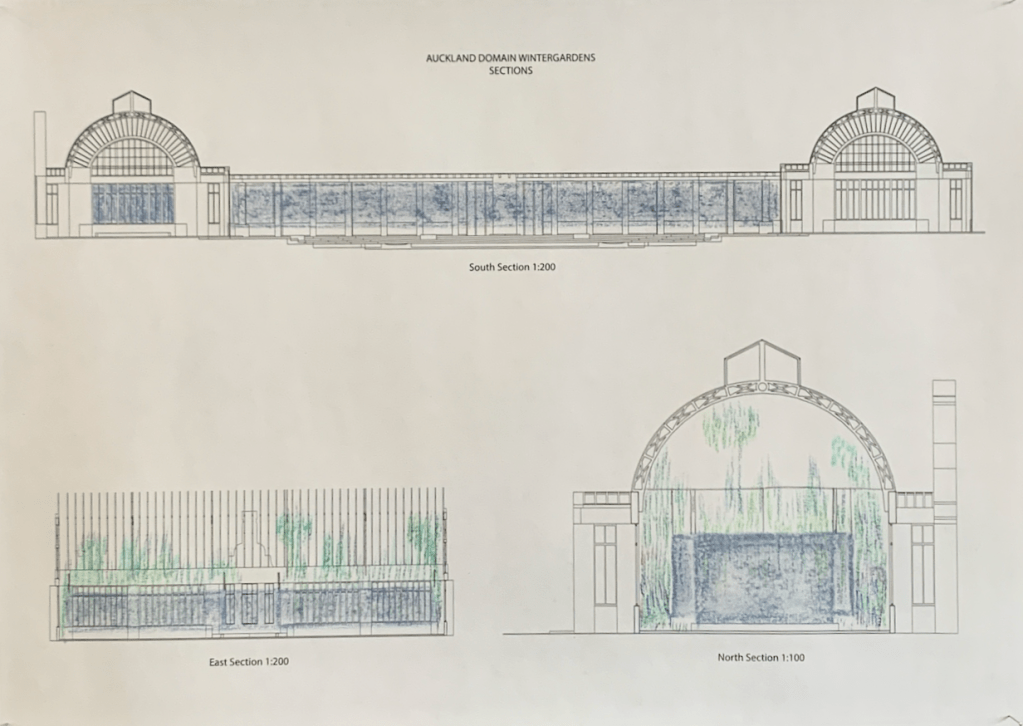
Printed Section with intervention added
Formative Assessment Feedback
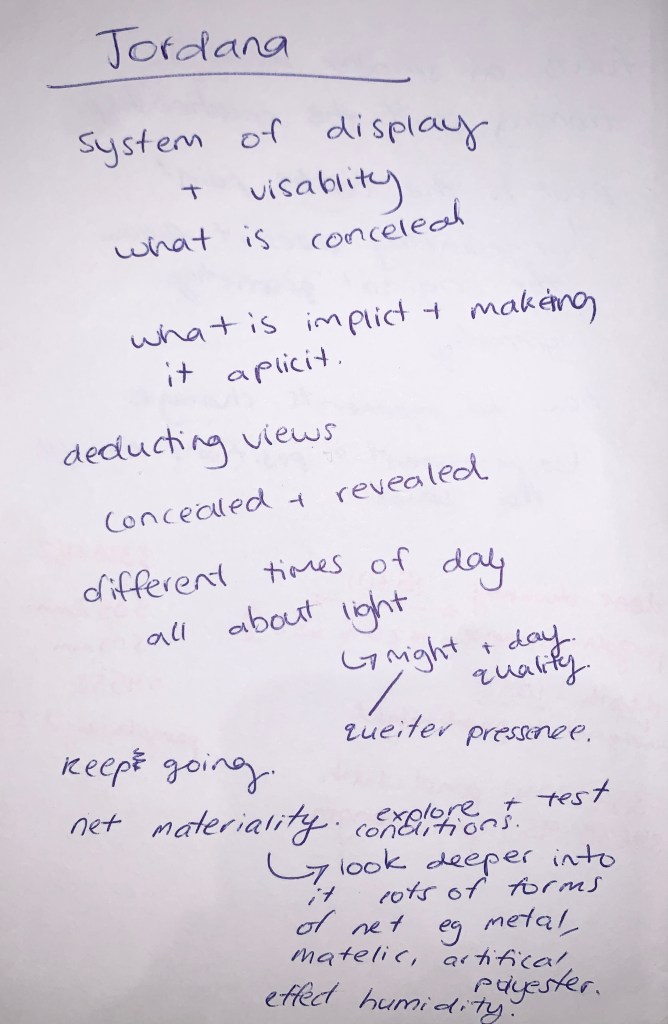
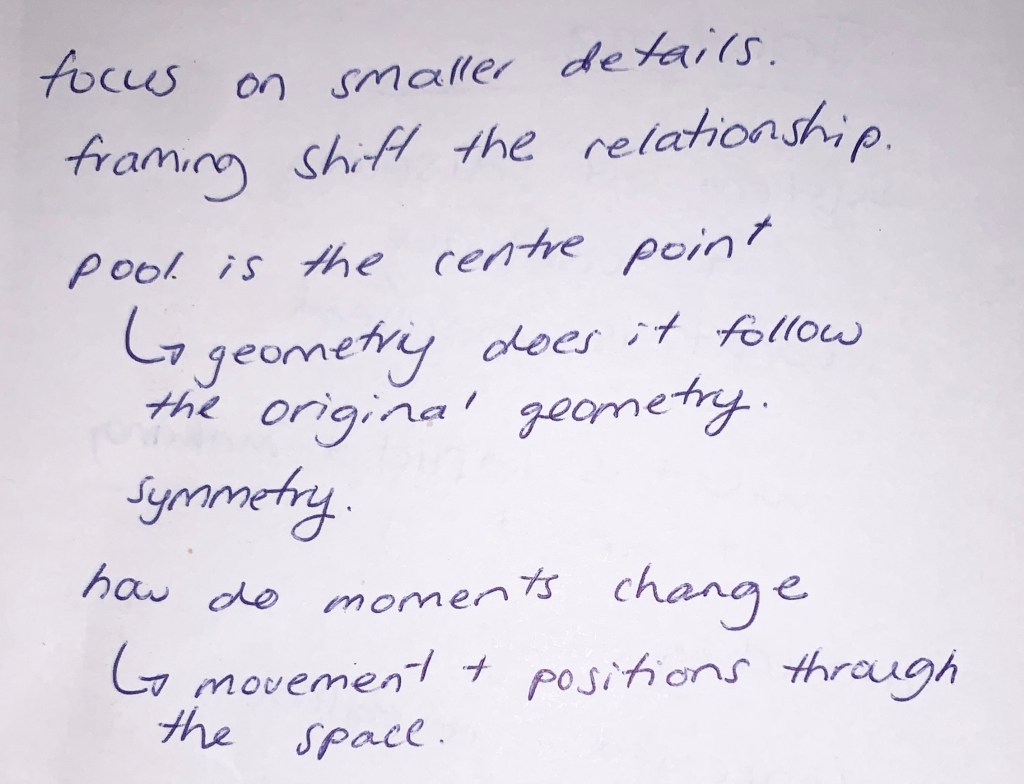
I felt that I received positive and useful feedback on my formative assessment. The main point in terms of next steps was looking into the materiality more and focusing on the details of the design.
 Spatial Design
Leave a comment