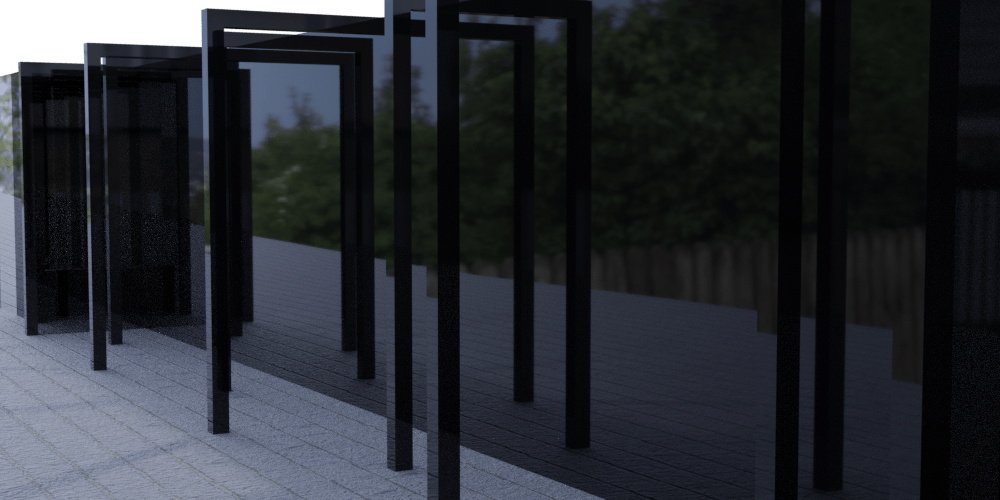
Moving forward from the formative presentation I felt that my initial design was probably a bit simple. I liked the look of it and the context but it definitely needed more of a purpose and programme. I started to sketch some ideas that incorporated various seating elements but also altered the movement path through the lane. Working with my original idea I thought I would be able to alter different sections of the lane to produce some variation whilst keeping elements of symmetry and repetition.
I didn’t want these seating spaces to be too big as I wanted to keep the idea of the panels created a realistic sized “door frame” in the reflection. At the same time I didn’t want these spaces to feel too enclosed. I realised that this could be thought through in terms of materials used. I recalled in an earlier peer discussion that one way glass was recommended and decided to look into this further. I thought it could be interesting to play on the concept of public/private and illusions. I could achieve this through altering which side was reflective and which was transparent and how would people act if they thought they could or couldn’t be seen by passers-by dependant on what side of the glass they were on.
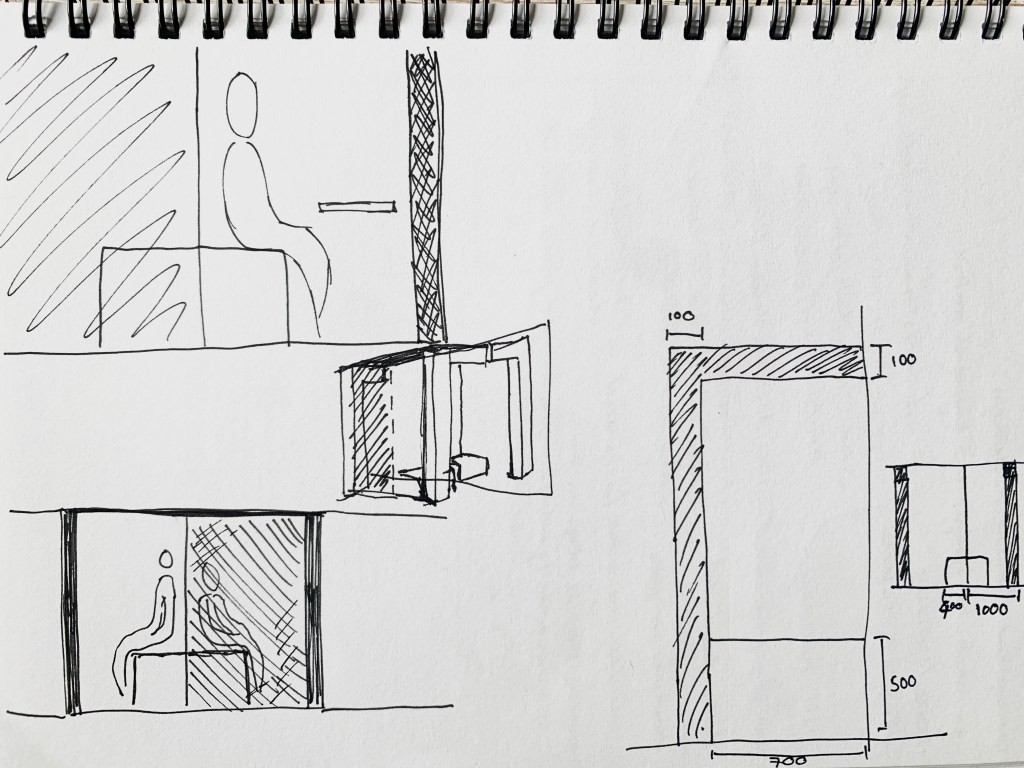
Developing original design to incorporate seating/movement 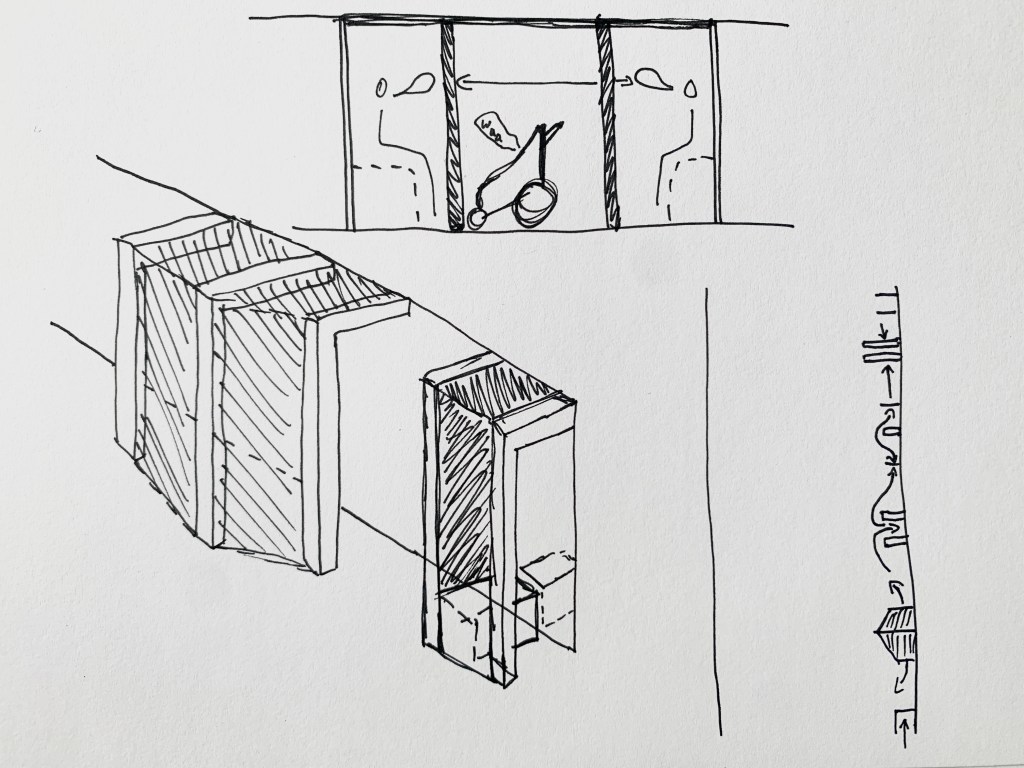
Developing original design to incorporate seating/movement
I did some quick sketches on illustrator to try and imagine how this one way glass might work and get my head around the concept further.
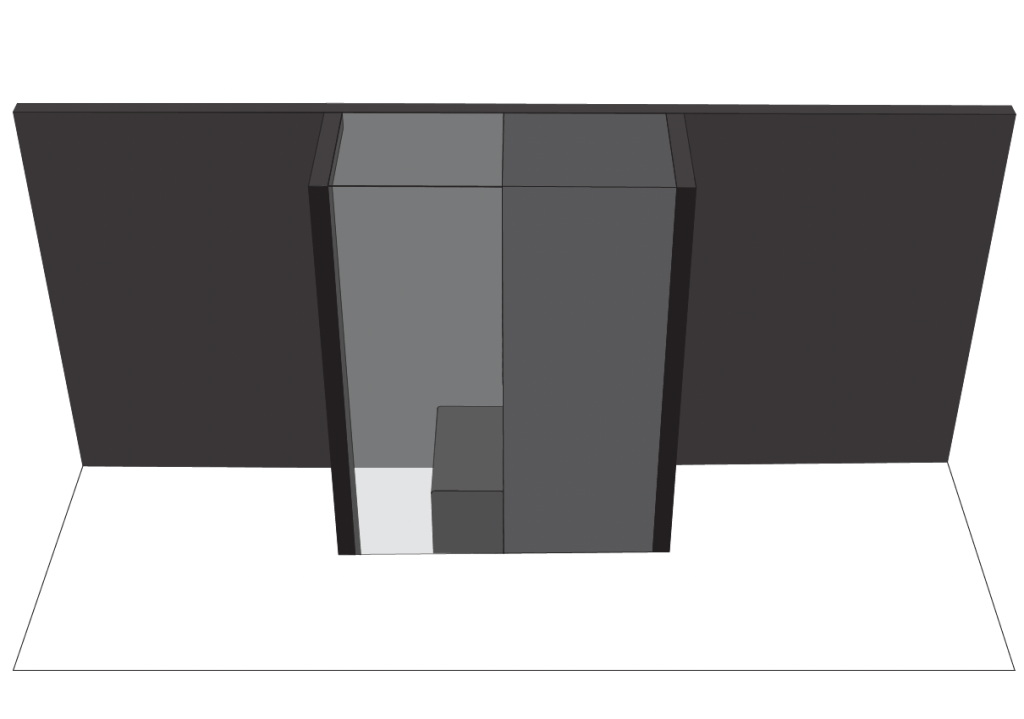
Illustrator sketches 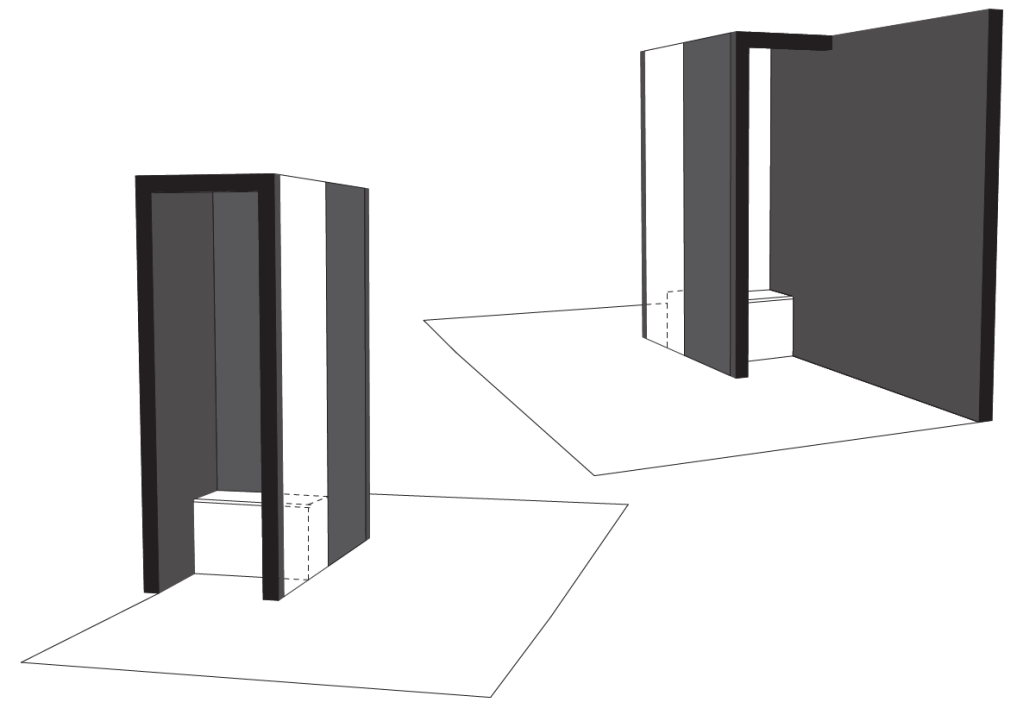
Illustrator sketches
Next step was to begin modelling in more detail. In previous weeks I had measured the site to work out the spacing between doorways and the angle of the sloped ground. With this knowledge I began to build a model of my proposed installation playing around with the size and positioning of the different panels and seating pods. I started from one end and work my way into the middle trying to keep the space varied as I moved along. I then mirrored the different elements onto the other end of the lane to add some more symmetry which ties in with the concept of reflection and repetition. Although not perfectly symmetrical (due to doorways) the general layout is more or less the same. This was inspired by Es Devlins Memory Palace as I like the simplicity and limitation of elements that allows the reflection to really enhance the overall effect of the work.

Modelling installation in Rhino – Fort street entry 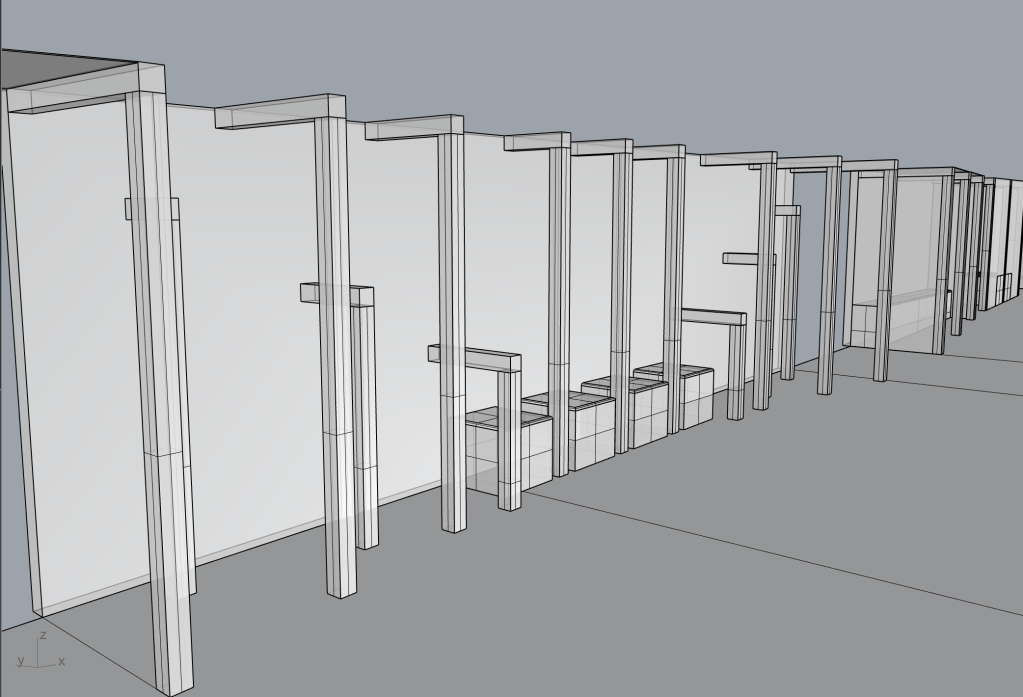
Modelling installation in Rhino – variation in height and width 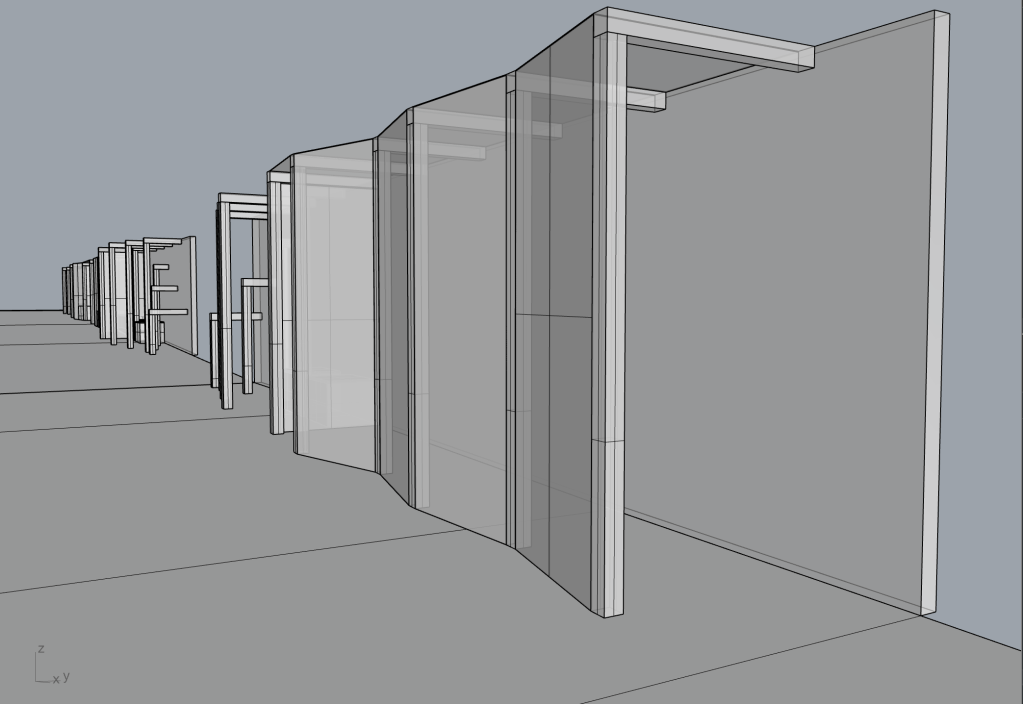
Modelling installation in Rhino – covered walkthrough space 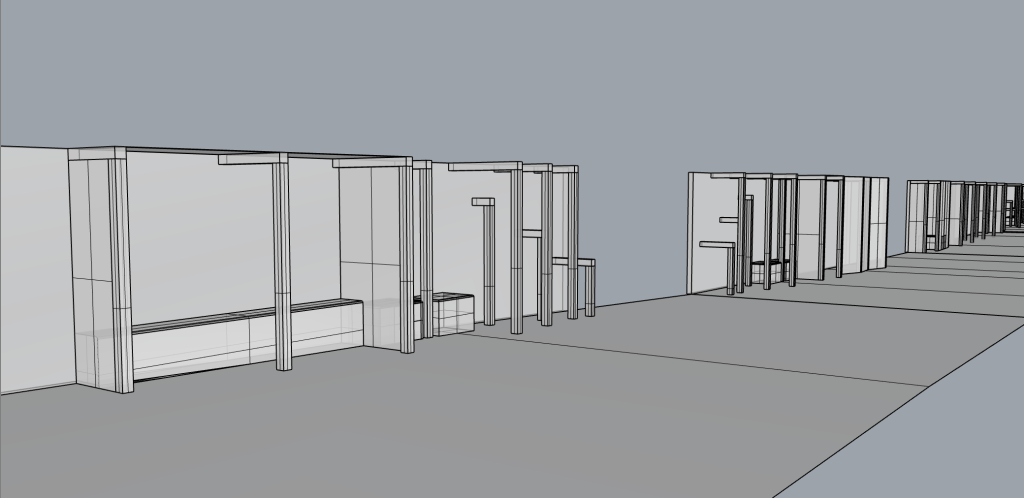
Modelling installation in Rhino – panels around doorway
I want this space to be used by a wide variety of people so it was important to me that there were areas of the design that could be used by wheelchair users and also parents with prams. Not all spaces are accessible, even to adults, some spaces are targeted at children to run through and weave in and out of. But there are several spaces that could be used by anyone.
To double check that my dimensions were suitable, I consulted the metric handbook and found the section detailing accessibility for wheelchair users. Using masking tape I marked out the dimension of the sections I was unsure about and checked them against the measurements in the metric handbook as well as visually getting a better understanding of scale.
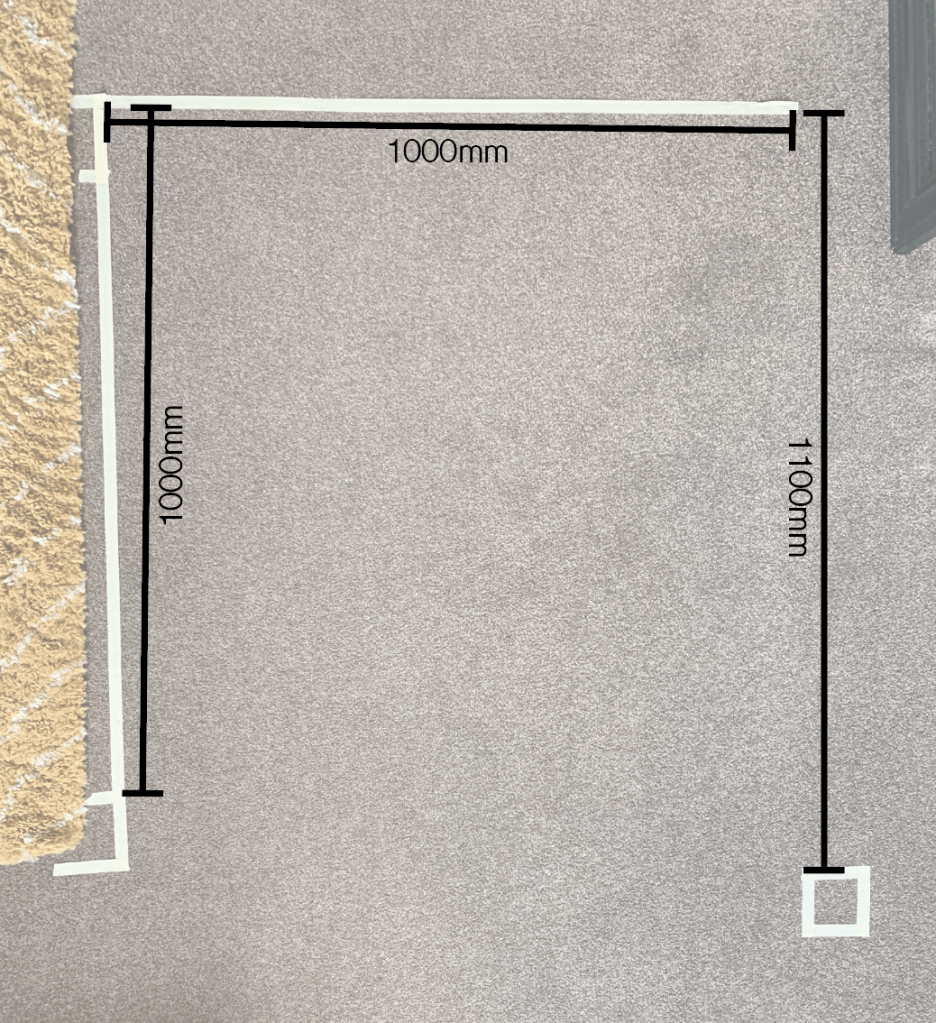
Checking dimensions for accessibility 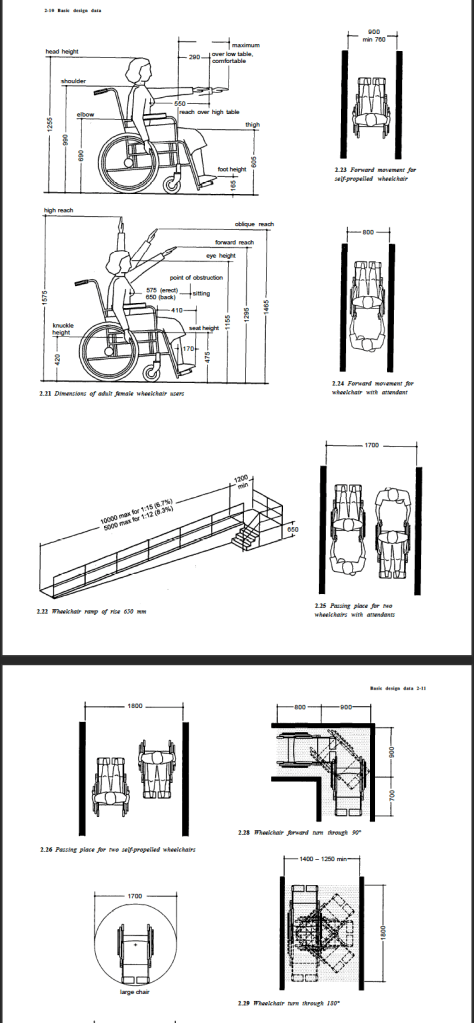
Screenshot from the metric handbook. Basic design data 2-10 and 2-11
After modelling the design I added it into a model of Fort Lane to create some rough plan and section drawings. Unfortunately the measurements didn’t quite add up on the model that I was given of the lane to my own measurements. This can be easily fixed in Rhino however the file is quite large so I’m having to work on it slowly. Despite this I was still able to get a decent idea about how my design will integrate within Fort Lane.
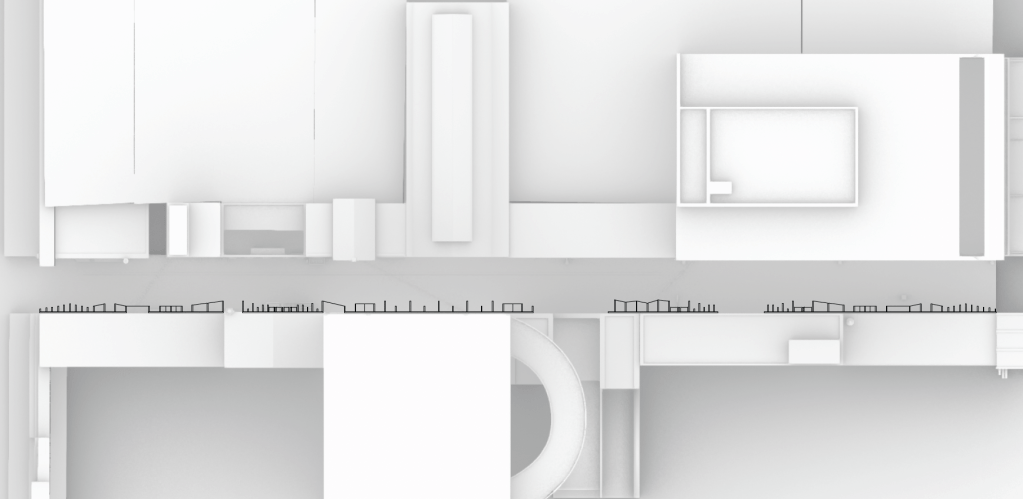
Fort Lane plan – with installation 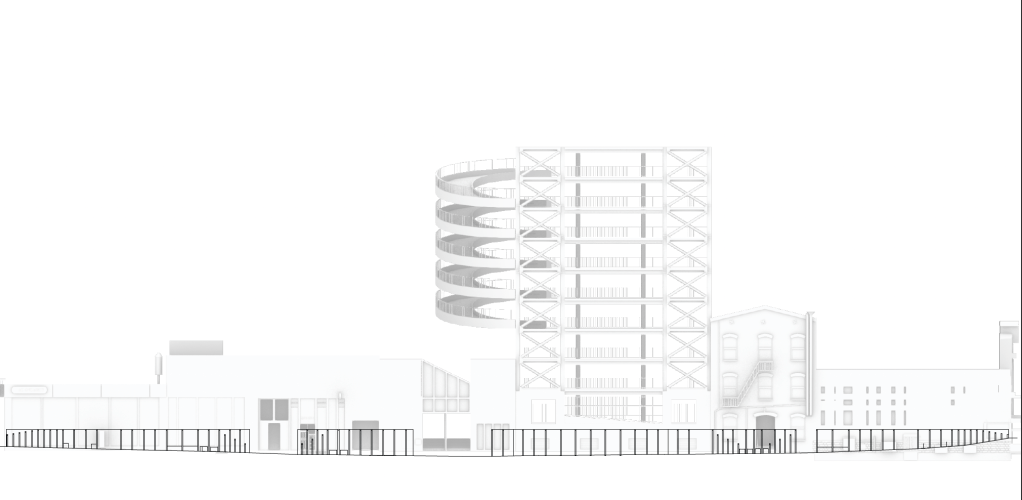
Fort Lane Section – with installation
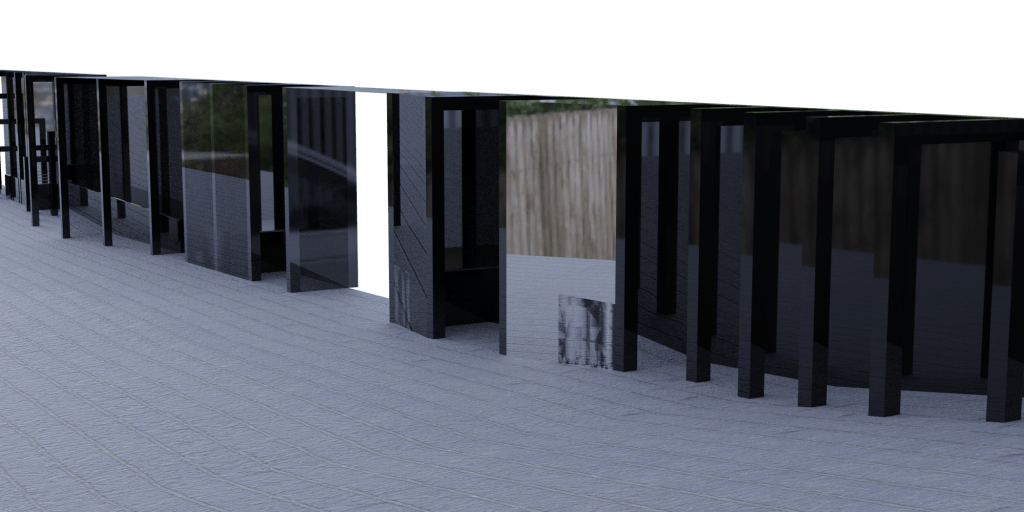
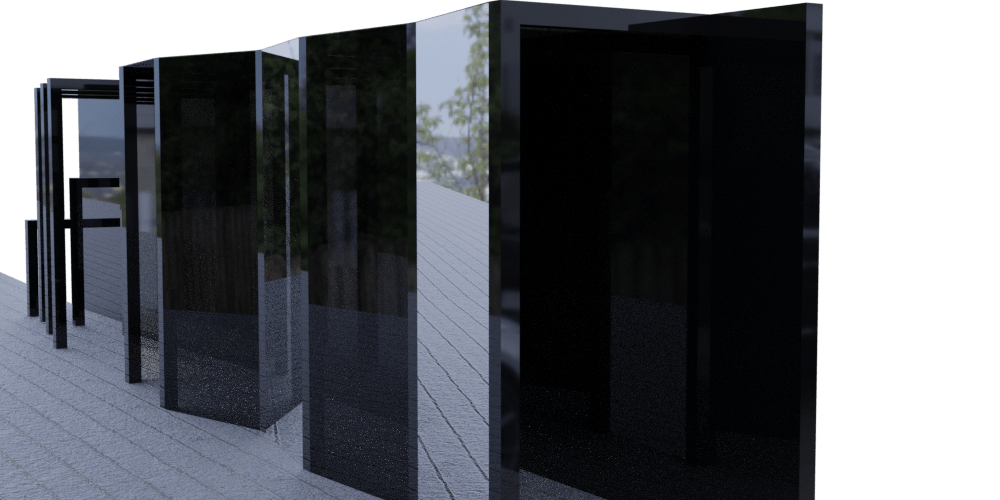
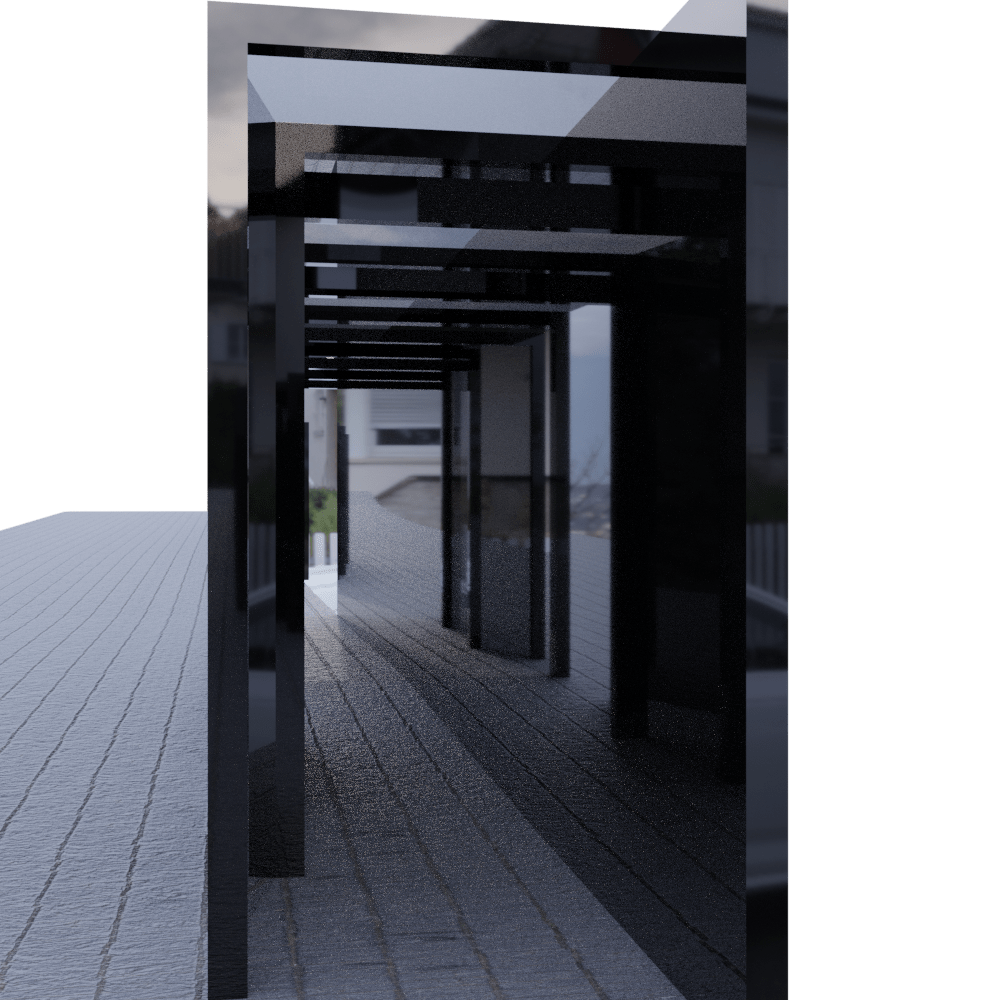
Next I brought the model into blender and applied materials, a shiny black reflective surface, a mirrored glass and a transparent glass. I did some test renders and was happy with how they turned out, I was able to see the effect of the reflection and how this creates the illusion of doorways within the site.
 Spatial Design
Leave a comment